
Table of Contents
A lot of people in Anderson and across Upstate South Carolina notice something strange:
Their teeth seem to hurt more when the weather changes.
Usually during:
- heavy humidity
- rainstorms
- sudden pressure changes
- cold fronts
- muggy summer weather
And no — you are probably not imagining it.
While humidity itself does not directly “damage” teeth, weather and pressure changes can sometimes aggravate underlying dental problems that were already there.
Tooth pain flaring up in humid weather?
Don’t ignore the discomfort. Call now for a dental checkup and personalized treatment.
Can Humidity Really Make Teeth Hurt?
Indirectly, yes.
Here’s what we usually tell patients:
Weather changes do not create cavities or infections overnight. But they can make existing problems more noticeable.
For families focused on prevention, 10 kid-friendly snacks that won’t cause cavities can also help reduce frequent sugar exposure and support stronger enamel over time.
Think of it like an old knee injury aching before rain.
Teeth with:
- cracks
- cavities
- old fillings
- exposed roots
- sinus pressure nearby
- grinding damage
- inflamed nerves
can sometimes become more sensitive during humid or stormy weather.
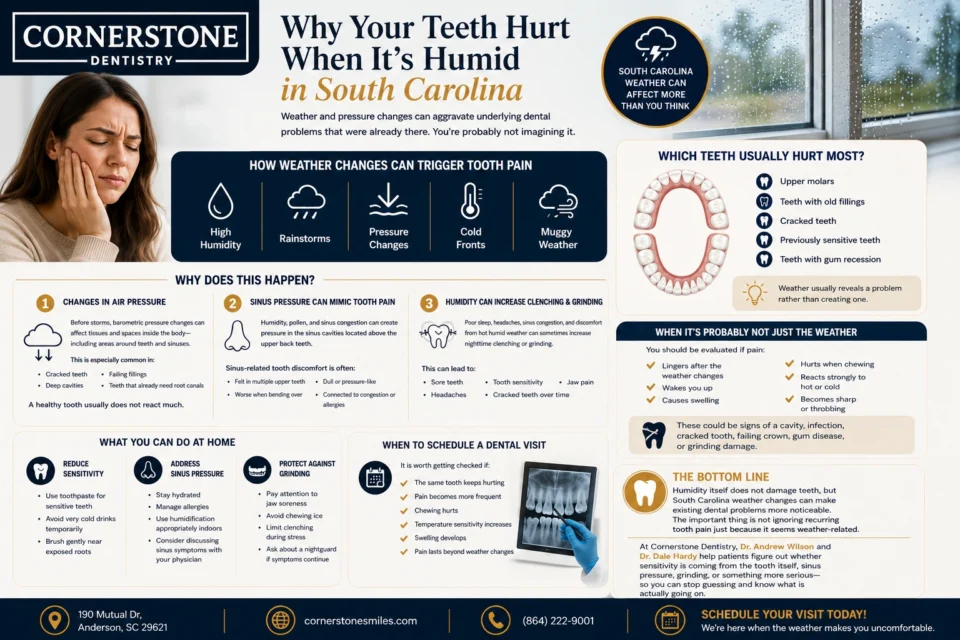
Why Does This Happen?
There are a few possible reasons.
1. Changes in Air Pressure
Before storms, barometric pressure changes can affect tissues and spaces inside the body — including areas around teeth and sinuses.
Teeth with inflamed nerves or tiny cracks may react more noticeably during pressure shifts.
This is especially common in:
- cracked teeth
- deep cavities
- failing fillings
- teeth that already need root canals
A healthy tooth usually does not react much.
For teeth already weakened by decay or damage, preventing cavities: dental crowns explains how crowns can help protect vulnerable tooth structure and reduce the risk of further problems.
2. Sinus Pressure Can Mimic Tooth Pain
This is extremely common in South Carolina during allergy season.
Humidity, pollen, and sinus congestion can create pressure in the sinus cavities located above the upper back teeth.
Patients often think:
“I must have a tooth infection.”
But sometimes the tooth itself is fine, and the pain is actually sinus-related.
Sinus-related tooth discomfort is often:
- felt in multiple upper teeth
- dull or pressure-like
- worse when bending over
- connected to congestion or allergies
3. Humidity Can Increase Clenching and Grinding
This one surprises people.
Poor sleep, headaches, sinus congestion, and discomfort from hot humid weather can sometimes increase nighttime clenching or grinding.
That can lead to:
- sore teeth
- jaw pain
- tooth sensitivity
- headaches
- cracked teeth over time
Which Teeth Usually Hurt Most?
Typically:
- upper molars
- teeth with old fillings
- cracked teeth
- previously sensitive teeth
- teeth with gum recession
Again, weather usually reveals a problem rather than creating one.
When It’s Probably Not Just the Weather
This part matters.
If tooth pain:
- lingers after the weather changes
- wakes you up
- causes swelling
- hurts when chewing
- reacts strongly to hot or cold
- becomes sharp or throbbing
then there may be an underlying dental issue that needs evaluation.
A lot of patients blame weather for months when the real problem is:
- a cavity
- infection
- cracked tooth
- failing crown
- gum disease
- grinding damage
DDS vs. DMD: A Dental Degree Breakdown
DDS and DMD are both recognized designations for dental professionals. Perhaps you’ve noticed that there are far more of one…
Learn More
What You Can Do at Home
If the discomfort is mild and occasional, these things may help:
Reduce sensitivity
- Use toothpaste for sensitive teeth
- Avoid very cold drinks temporarily
- Brush gently near exposed roots
Address sinus pressure
- Stay hydrated
- Manage allergies
- Use humidification appropriately indoors
- Consider discussing sinus symptoms with your physician
Protect against grinding
- Pay attention to jaw soreness
- Avoid chewing ice
- Limit clenching during stress
- Ask about a nightguard if symptoms continue
When to Schedule a Dental Visit
It is worth getting checked if:
- the same tooth keeps hurting
- pain becomes more frequent
- chewing hurts
- temperature sensitivity increases
- swelling develops
- pain lasts beyond weather changes
Sometimes an x-ray quickly reveals the issue. Other times, the tooth is healthy and the problem is sinus-related or muscular.
Either way, clarity usually reduces a lot of anxiety.
The Bottom Line
Humidity itself does not damage teeth, but South Carolina weather changes can absolutely make existing dental problems more noticeable.
In Anderson, we especially see this during:
- heavy summer humidity
- allergy season
- rapid storm shifts
- pressure changes
The important thing is not ignoring recurring tooth pain just because it seems weather-related.
At Cornerstone Dentistry, Dr. Andrew Wilson and Dr. Dale Hardy help patients figure out whether sensitivity is coming from the tooth itself, sinus pressure, grinding, or something more serious — so you can stop guessing and know what is actually going on.
Teeth aching when the air feels heavy?
Get gentle, professional dental care in South Carolina. Call now to schedule relief you can trust.