
Table of Contents
Most parents already know candy and soda are not great for kids’ teeth.
The harder question is:
“What can my kids actually snack on that won’t constantly increase cavity risk?”
Because real life is busy.
Parents in Anderson are juggling:
- school schedules
- sports
- daycare
- picky eaters
- grocery costs
- packed lunches
- convenience foods
- and children who somehow seem hungry every 45 minutes
So when dentists talk about “healthy snacks,” it can sometimes sound unrealistic.
Here’s what we usually tell families at Cornerstone Dentistry:
It’s not about raising kids who never eat sugar.
It’s about reducing how often teeth are exposed to cavity-causing conditions throughout the day.
That distinction matters.
Many parents assume cavities are only about how much sugar children eat.
But frequency often matters just as much.
A child slowly sipping juice or snacking on sticky crackers all afternoon may create more cavity risk than a child who eats a treat quickly with a meal and then brushes later.
The good news is there are plenty of kid-friendly snacks that are:
- realistic
- affordable
- easy to pack
- and much gentler on teeth
Let’s go through 10 snacks dentists generally prefer — and why they help reduce cavity risk.
Keep Cavities Away Early
Regular dental visits and smart snack choices help children enjoy stronger, healthier smiles. Call today to book an appointment.
First: What Actually Causes Cavities?
Before the snack list, it helps to understand what dentists are trying to prevent.
Cavities happen when:
- bacteria feed on sugars and starches
- acid is produced
- enamel gradually weakens
- repeated acid attacks create decay
This means cavity risk increases with foods that:
- stick to teeth
- stay in the mouth a long time
- are eaten constantly throughout the day
- are highly sugary or processed
- reduce saliva flow
Saliva matters because it naturally helps neutralize acid and protect enamel.
So the goal is not perfection.
The goal is helping the mouth recover between snacks instead of staying acidic all day long.
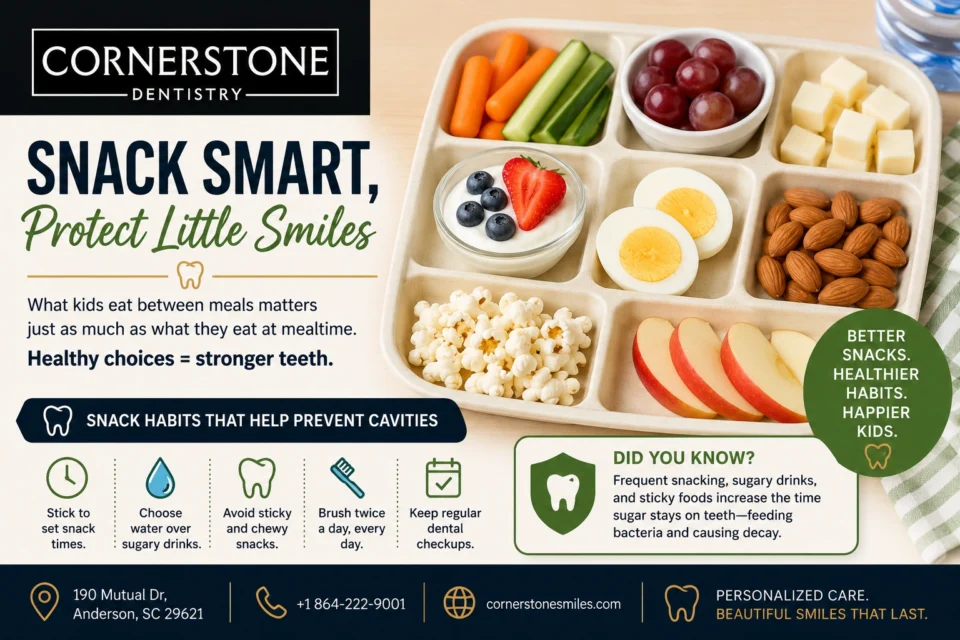
1. Cheese
Cheese is one of the most dentist-friendly snacks available.
Seriously.
Why Cheese Helps Teeth
Cheese:
- contains calcium and phosphorus
- helps strengthen enamel
- stimulates saliva flow
- is low in sugar
- can help neutralize acids
String cheese, cheddar cubes, mozzarella, and sliced cheese are all reasonable options.
And most kids actually tolerate cheese better than many “healthy” snacks parents buy.
2. Apples (Especially With Meals)
Apples still contain natural sugars, so they are not “cavity-proof.”
But they are generally much better than sticky processed snacks.
Why Apples Are Better Than Many Snack Foods
Apples:
- contain water
- stimulate saliva
- do not cling to teeth the way gummies do
- provide fiber
- are less cavity-promoting than crackers or fruit snacks
That said:
- dried apples are much stickier
- caramel apples are a completely different story
Fresh apples are the better choice.
3. Yogurt (Low-Sugar Versions)
Yogurt can be excellent for teeth — with one big catch:
Many children’s yogurts are loaded with sugar.
Some contain nearly as much sugar as dessert products.
Better Yogurt Choices
Look for:
- lower-sugar yogurt
- plain yogurt with fruit added
- Greek yogurt
- yogurt without sticky candy mix-ins
Yogurt provides:
- calcium
- protein
- beneficial bacteria
- less cavity risk than many processed snacks
The key is avoiding heavily sweetened versions when possible.
4. Nuts (If Age Appropriate)
For older children without allergy concerns, nuts are excellent snacks.
Why Dentists Like Nuts
Nuts are:
- low in sugar
- filling
- high in protein
- non-sticky
- less likely to feed cavity-causing bacteria
Good options include:
- almonds
- cashews
- pistachios
- walnuts
Obviously, choking risk and allergy considerations matter for younger children.
5. Crunchy Vegetables
Many kids resist vegetables initially, but crunchy vegetables are surprisingly good for oral health.
Examples:
- carrots
- celery
- cucumbers
- bell peppers
Why Crunchy Vegetables Help
They:
- stimulate saliva
- do not coat teeth heavily
- are low in sugar
- help clean the mouth mechanically somewhat while chewing
They are also much less problematic than chips or crackers.
6. Hard-Boiled Eggs
Eggs are underrated as kid snacks.
They contain:
- protein
- phosphorus
- vitamins
- minimal sugar
And unlike processed snack foods, they do not fuel cavity-causing bacteria heavily.
They are especially helpful for children who constantly feel hungry because protein tends to keep kids fuller longer.
7. Peanut Butter (Without Constant Grazing)
Peanut butter is somewhat mixed in dentistry conversations.
It is better than candy or gummies, but moderation matters.
The Important Thing:
Peanut butter can become sticky.
So:
- pairing it with apples or celery is better
- constant grazing throughout the day is less ideal
Natural peanut butter with lower added sugar is usually preferable.
Again, allergy considerations matter depending on the child and school environment.
8. Popcorn (Plain or Lightly Buttered)
Popcorn surprises many parents.
It is generally much safer for teeth than:
- gummies
- fruit snacks
- sticky granola bars
- chewy candy
Why It’s Better
Popcorn does not cling to teeth nearly as aggressively as sticky snacks.
But:
- unpopped kernels can crack teeth
- heavily caramel-coated popcorn is obviously different
Simple popcorn is usually a reasonable occasional snack.
9. Fresh Fruit Instead of Fruit Snacks
This is one of the biggest snack misunderstandings.
Many parents assume fruit snacks are basically equivalent to fruit.
They are not.
Fruit snacks often:
- stick heavily to teeth
- sit in grooves for hours
- contain concentrated sugars
- behave similarly to gummy candy
Fresh fruit is usually much better.
Especially:
- strawberries
- watermelon
- blueberries
- pears
The water content and reduced stickiness matter significantly.
10. Water Instead of Juice or Sports Drinks
Technically not a snack, but this may matter more than the snacks themselves.
A lot of childhood cavities are tied more to beverages than food.
Especially:
- juice boxes
- sports drinks
- flavored waters
- sweet tea
- constant milk sipping overnight
Water Helps Because It:
- rinses the mouth
- reduces acid exposure
- supports saliva flow
- contains no sugar
- does not feed oral bacteria
And if local water contains fluoride, that may provide additional enamel support.
How General Dentistry Is Evolving With Modern Technology
Good news: the dental visit you remember isn’t the one you’ll get today. General dentistry now blends smart tech with…
Learn More
The Biggest Problem Is Usually Constant Snacking
This matters more than many parents realize.
Even relatively healthy snacks become problematic if children eat constantly throughout the day.
Why?
Because the mouth never fully recovers from acid exposure.
Frequent Grazing Creates:
- repeated acid attacks
- prolonged bacterial activity
- constant sugar exposure
- lower oral pH
This is why dentists often recommend:
- structured snack times
- water between snacks
- limiting all-day sipping habits
Sticky Snacks Are Usually the Worst
The biggest cavity offenders are often foods that:
- cling to grooves
- stay stuck for hours
- are eaten frequently
Examples include:
- gummies
- fruit snacks
- chewy granola bars
- sticky candy
- dried fruit
- taffy
- crackers constantly throughout the day
Ironically, parents sometimes replace candy with foods that are just as cavity-promoting.
“Healthy” Snacks Are Not Always Tooth-Healthy
This surprises many families.
Some foods marketed as healthy are actually rough on teeth.
Examples:
- raisins
- dried mango
- fruit leather
- juice smoothies
- sports drinks
- sweetened yogurt
- granola bars
These foods are not “bad.”
But many are:
- sticky
- sugary
- acidic
- consumed frequently
That combination raises cavity risk.
Bedtime Snacks Cause Extra Problems
This is especially important for younger kids.
Saliva flow decreases during sleep.
So sugars sitting on teeth overnight become more damaging.
Dentists especially worry about:
- milk after brushing
- juice before bed
- nighttime snacking
- sippy cups in bed
Water is usually the safest bedtime beverage.
You Do Not Need a “Perfect” Diet to Prevent Cavities
This matters because many parents feel guilty unnecessarily.
Even children with excellent diets sometimes get cavities.
Genetics, enamel quality, crowding, medications, dry mouth, and brushing habits all matter too.
The goal is not raising children who never eat treats.
The goal is reducing:
- frequency
- stickiness
- prolonged sugar exposure
Consistency matters far more than perfection.
Simple Snack Habits That Help Teeth
Dentists usually recommend:
- drinking water after snacks
- limiting constant grazing
- brushing twice daily
- reducing sticky snacks
- avoiding sugary drinks throughout the day
- keeping regular cleanings
Those habits matter more than chasing “perfect” foods.
The Bottom Line
The best kid-friendly snacks for teeth are usually:
- low in sugar
- non-sticky
- high in protein or fiber
- and less likely to sit on teeth for hours
Good options include:
- cheese
- yogurt
- apples
- crunchy vegetables
- eggs
- nuts
- popcorn
- fresh fruit
- and water instead of sugary drinks
At Cornerstone Dentistry in Anderson, Dr. Andrew Wilson and Dr. Dale Hardy spend a lot of time helping parents focus on realistic cavity prevention — not perfection.
Because preventing cavities is usually less about banning every treat and more about building healthier everyday habits that children can realistically maintain long term.
Make Every Smile Cavity-Free
From healthy snacks to regular checkups, we're here to help your child maintain a bright, healthy smile.