
Table of Contents
If your child, or you, just got braces and plays a contact or high-impact sport, the mouthguard drawer probably deserves a second look. A guard that fit before orthodontic treatment may no longer fit correctly once brackets, wires, or changing tooth positions enter the picture. The goal isn’t simply to put any piece of plastic over the teeth. It’s to use a properly fitted sports mouthguard that protects the teeth and soft tissues without interfering with orthodontic appliances or tooth movement.
Key Takeaways
- The American Dental Association considers stock mouthguards the least effective type because their generic design can result in poor fit and inadequate retention.
- The American Association of Orthodontists strongly recommends well-fitted mouthguards for athletes with braces and describes custom-fitted guards as offering particularly good safety, comfort, and fit.
- The ADA recommends mouthguards for about 30 contact, collision, high-velocity, and recreational activities where dental injuries can occur.
- A mouthguard should be checked regularly and replaced when it becomes cracked, worn, loose, or no longer fits correctly.
- Children and orthodontic patients may need replacements more frequently because teeth erupt, jaws grow, and orthodontic treatment changes tooth position.
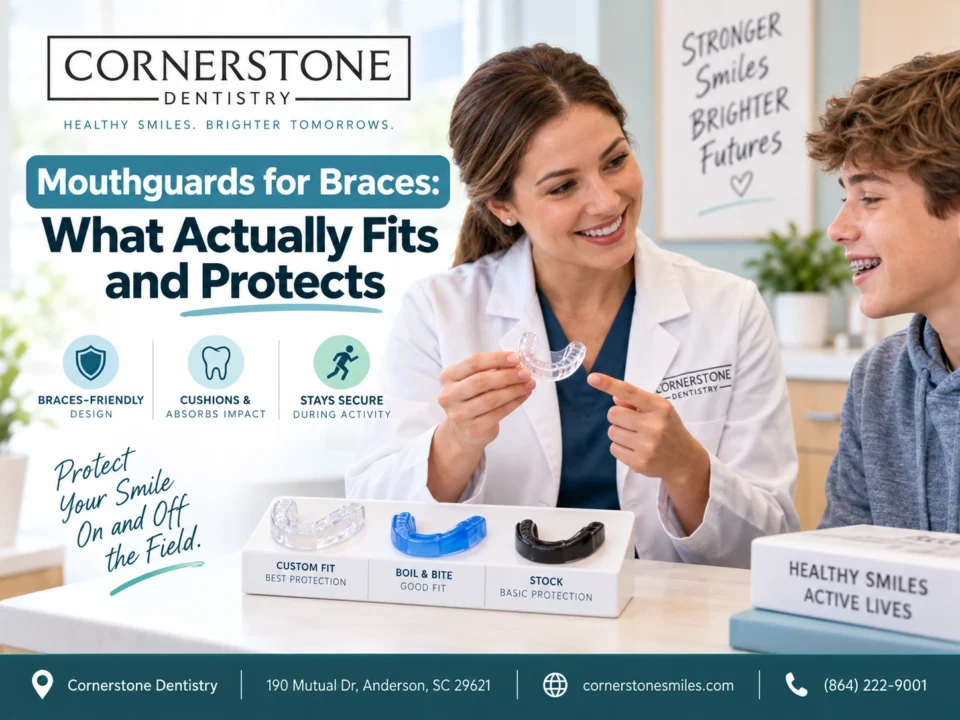
The three types of mouthguards, compared. The American Dental Association divides athletic mouthguards into three general categories:
- Stock mouthguards are inexpensive and widely available, but they come in a limited number of prefabricated sizes and aren’t adapted to the individual athlete’s teeth. The ADA describes stock guards as the least effective type because their generic fit can result in inadequate retention and frequent repositioning during activity.
- Mouth-formed or boil-and-bite mouthguards are made from thermoplastic material that softens in hot water and is molded around the teeth. They can provide a more individualized fit than a stock guard when prepared correctly. The ADA notes that professional assistance with fitting may be particularly useful for people who wear orthodontic appliances. If you have braces, use a product specifically designed or approved for use with braces rather than assuming every boil-and-bite guard will work safely.
- Custom-made mouthguards are fabricated from an impression, scan, or model of the patient’s teeth by a dental office or laboratory. They can be designed for an individual athlete’s bite and orthodontic needs. The American Association of Orthodontists describes custom mouthguards as its preferred option for personalized safety and comfort, particularly during orthodontic treatment.
That doesn’t mean an over-the-counter guard is useless. The ADA notes that properly fabricated and consistently worn mouthguards of more than one type can provide protection. Fit, retention, appropriate design, and actually wearing the mouthguard during sports are all important.
Why braces change the fit problem. Brackets and wires add new contours to the front of the teeth, and orthodontic treatment continuously changes tooth position. A mouthguard that fit well before braces may become tight, loose, uncomfortable, or unable to seat correctly afterward.
There’s another reason protection becomes especially important. When an athlete wearing braces takes a blow to the mouth, brackets and wires can press against the inside of the lips and cheeks. The AAO notes that orthodontic appliances can increase the risk of soft-tissue injury during an impact and that sports trauma can also bend wires or damage brackets.
A properly fitted orthodontic mouthguard creates a protective barrier between the braces and the soft tissues while helping protect the teeth themselves.
This doesn’t mean the mouthguard should tightly lock around every bracket. The design needs to account for the appliance and ongoing tooth movement. That’s one reason the ADA specifically recommends professional assistance when fitting a mouthguard around orthodontic appliances.
What a custom or orthodontic-specific guard involves. Depending on the type of mouthguard, your dentist or orthodontic provider may take an impression or digital scan of your teeth and evaluate your braces, bite, tooth movement, and the type of sport you play.
For patients in active orthodontic treatment, the mouthguard needs enough room to accommodate the brackets and any expected tooth movement while still remaining secure during activity. Your dental or orthodontic team can also check the guard periodically as treatment progresses.
The AAO recommends custom or orthodontic-specific mouthguards because they can be designed to fit over brackets and reduce the risk of cuts, tooth fractures, and damage to orthodontic hardware.
We cover the broader benefits of sports mouthguards in Mouthguards – Do They Really Work?, while Don’t Get Kicked in the Teeth – Wear a Mouthguard explains why proper mouth protection matters even in sports that aren’t usually thought of as collision sports.
Caring for a mouthguard. The American Association of Orthodontists recommends keeping sports mouthguards clean, dry, protected, and regularly inspected.
A good routine includes:
- Rinse it after each use. Use cool or cold water to remove saliva and debris.
- Clean it regularly. The AAO recommends gentle cleaning with mild soap and a soft-bristled toothbrush. Its mouthguard guidance also lists periodic soaking with an appropriate removable-appliance cleaner as an option.
- Let it dry. Don’t put a wet mouthguard directly into a sealed container.
- Use a ventilated case. A perforated container allows air circulation and helps keep the guard protected between practices and games.
- Keep it away from heat. Hot water, direct sunlight, or a hot car can warp mouthguard material and change its fit.
- Inspect it regularly. Replace a guard that is cracked, torn, chewed, distorted, or no longer fits securely.
For children and teens, fit can change even when the guard itself isn’t visibly damaged. The AAO recommends replacement after significant growth, certain dental procedures, or whenever the mouthguard no longer fits correctly. During orthodontic treatment, changing tooth positions are another reason to have the fit checked periodically.
Which sports actually call for one. Mouthguards aren’t only for football and boxing. The ADA recommends properly fitted mouthguards for sporting and recreational activities where there is a meaningful risk of dental or facial injury.
Its current list includes roughly 30 activities across contact, collision, limited-contact, and high-velocity categories, including:
- Football
- Basketball
- Soccer
- Lacrosse
- Ice and field hockey
- Wrestling
- Boxing and other combat sports
- Martial arts
- Rugby
- Baseball and softball
- Gymnastics and acrobatics
- Skateboarding and inline skating
- Skiing
- Bicycling
- Surfing
- Volleyball
- Equestrian sports
- Weightlifting
The point isn’t that every activity carries identical risk. It’s that dental trauma can happen in sports where players don’t necessarily collide with one another. Falls, balls, equipment, elbows, and other unexpected impacts can all injure teeth.
There are also sports where mouthguards are specifically required under competition rules. The ADA notes that NFHS and NCAA rules mandate them in several high-school and collegiate sports. For high school wrestling specifically, NFHS rules require wrestlers with braces or certain orthodontic appliances to use an appropriate intraoral tooth and mouth protector. The NFHS updated and clarified the mouth-protector language again for the 2026–27 wrestling season.
Frequently asked questions.
Do I need a brand-new guard every time my braces are adjusted? Not automatically. An orthodontic adjustment doesn’t necessarily make the guard unusable that day. What matters is whether it continues to fit correctly and comfortably as the teeth move. Inspect the fit regularly and have it checked if it becomes tight, loose, distorted, uncomfortable, or difficult to keep in place.
What about clear aligners during sports? The AAO recommends removing clear aligners during contact play and wearing a properly fitted sports mouthguard instead. Put your aligners back in afterward according to your orthodontic wear schedule once you’ve cleaned your teeth or followed your provider’s instructions.
What about removable retainers? Don’t automatically stack a conventional sports mouthguard over a removable retainer. Different appliances and mouthguard designs fit differently, and combining devices can alter fit or bite. Ask your orthodontist whether your mouthguard is intended to be worn with the retainer in place or whether the removable retainer should come out during play. Fixed retainers remain bonded behind the teeth and are managed differently.
Can I use a boil-and-bite guard with braces? Possibly, but choose one specifically intended for orthodontic use and follow its directions carefully. The ADA notes that dental professionals may assist with molding mouth-formed guards for people with orthodontic appliances. A standard guard that isn’t designed to accommodate brackets and tooth movement may fit poorly or interfere with the braces. If you’re unsure, have your dentist or orthodontic provider check it.
Is a custom mouthguard always more protective than every boil-and-bite guard? The evidence isn’t that simple. The ADA says custom guards provide excellent adaptability and fit and are considered by many to be the most protective option, but it also notes that other properly fabricated mouthguards can be effective when they fit well and are consistently worn. The AAO strongly favors custom-fitted guards for athletes undergoing orthodontic treatment because of their personalized fit, comfort, and ability to accommodate appliances.
How much does a custom mouthguard cost compared with a store-bought one? Store-bought stock and boil-and-bite guards are generally less expensive because they don’t involve an individual impression, scan, laboratory fabrication, or professional fitting. Custom mouthguard costs vary by practice, design, insurance coverage, and the athlete’s needs, so there isn’t one reliable national price that applies to everyone. Ask your dental office for the actual fee before comparing options.
Can my child wear a mouthguard while baby teeth are loose or permanent teeth are erupting? Usually, but growing children need especially careful fit monitoring. Erupting teeth, loose primary teeth, jaw growth, and changes in the dental arch can all affect how a mouthguard fits. Tell your dentist or orthodontist about loose or erupting teeth when the guard is fitted and have it reassessed if the fit changes.
How often should a mouthguard be replaced? There isn’t one replacement schedule that applies to everyone. AAO guidance says to replace a guard when it is damaged or no longer fits properly and to consider replacement after growth spurts or dental changes. Athletes who use mouthguards frequently may need replacements more often. Check yours before the season and periodically throughout it rather than assuming last year’s guard still fits.
Beyond sports: everyday habits that protect braces too. A sports mouthguard helps manage impact-related risks, but protecting braces continues after practice ends.
The AAO recommends avoiding hard, sticky, and chewy foods that can loosen brackets or bend wires. Ice, hard candy, popcorn kernels, nuts, caramels, and similar foods can create unnecessary problems during orthodontic treatment.
Good oral hygiene matters too. Brackets and wires create additional areas where plaque and food can collect, so brushing carefully around the hardware and cleaning between the teeth remain important throughout treatment. Floss threaders, interdental brushes, or other orthodontic cleaning tools may make those areas easier to reach.
Our guide to Brushing with Braces: Cleaning Every Nook & Cranny covers those daily cleaning techniques in more detail. Parents wondering about the broader orthodontic timeline can also read Is It Time for Braces Already?.
If you’re using clear aligners instead of brackets and wires, remember that aligners aren’t substitutes for sports mouthguards during contact play. Remove the aligner and use appropriate protective equipment according to your orthodontic provider’s instructions.
If your athlete’s current mouthguard no longer fits after braces were placed, or you aren’t sure whether the guard is appropriate for orthodontic use, have it checked before the next practice or game. Call Cornerstone Dentistry at (864) 222-9001 or schedule an appointment to discuss mouthguard options for your athlete.