
Table of Contents
If you’ve been using the same manual toothbrush for years, you’ve probably wondered at some point:
“Do electric toothbrushes actually clean better?”
“Or is this just another overpriced gadget?”
Here’s what most dentists will tell you honestly:
A good electric toothbrush can absolutely improve brushing quality for many people — especially if you struggle with plaque buildup, gum inflammation, brushing too hard, or inconsistent technique.
But here’s the important part many patients in Anderson do not realize:
You do not need a $300 smart toothbrush with Bluetooth tracking to get excellent cleaning.
In fact, some of the best-performing electric toothbrushes in 2026 are under $100.
At Cornerstone Dentistry, Dr. Andrew Wilson and Dr. Dale Hardy usually focus less on fancy features and more on:
- brushing consistency
- pressure control
- plaque removal
- gum health
- and whether patients will actually use the brush properly long term
Because the “best” toothbrush is usually the one you will consistently use twice a day without damaging your gums.
Let’s break down which electric toothbrushes under $100 are actually worth considering in 2026 — and which features matter more than marketing hype.
Find Your Perfect Electric Toothbrush
Upgrade your brushing routine with one of the best electric toothbrushes under $100 in 2026.
The Short Answer: What Most People Actually Need
Most patients do not need:
- AI brushing maps
- touchscreen handles
- 15 cleaning modes
- app coaching
- voice assistants
Most people benefit most from:
- a timer
- pressure sensor
- reliable brushing motion
- comfortable brush head
- good battery life
- affordable replacement heads
That is the sweet spot under $100.
What Dentists Usually Care About Most
Before getting into recommendations, here’s what actually matters clinically.
1. Pressure Sensors
This is one of the biggest upgrades over manual brushing.
Many people brush far too aggressively.
That can contribute to:
- gum recession
- enamel wear
- sensitivity
Pressure sensors help reduce that risk.
2. Timers
Most people brush for far less than two minutes.
Built-in timers improve consistency significantly.
3. Brush Motion
There are two main styles:
- oscillating-rotating (Oral-B style)
- sonic vibration (Sonicare style)
Both can work extremely well.
Some patients simply prefer one feel over the other.
4. Replacement Head Cost
This gets overlooked constantly.
A cheap toothbrush with expensive heads may cost more long term than a slightly pricier brush with affordable replacements.
Best Overall: Oral-B Pro 1000
Oral-B Pro 1000 Electric Rechargeable Toothbrush
This is still one of the most consistently dentist-recommended budget electric toothbrushes in 2026.
Why It Stands Out
The Pro 1000 focuses on the basics:
- strong plaque removal
- pressure sensor
- quadrant timer
- reliable oscillating cleaning
It does not try to overwhelm users with unnecessary tech.
That simplicity is part of why dentists like it.
Best For:
- heavy plaque buildup
- gum inflammation
- first-time electric toothbrush users
- patients switching from manual brushes
Downsides:
- louder than Sonicare
- fewer comfort features
- basic charging base
- no app connectivity
But honestly, most people do not need app connectivity to brush effectively.
Best Sonic Toothbrush Under $100: Philips Sonicare ProtectiveClean 4100
Philips Sonicare ProtectiveClean 4100
The Sonicare 4100 is probably the most commonly recommended sonic brush under $100.
Why Patients Like It
Compared to Oral-B’s oscillating feel, Sonicare brushes feel:
- smoother
- quieter
- gentler
- less “scrubbing”
Many patients with sensitive gums strongly prefer sonic brushing.
Best For:
- sensitive teeth
- gum recession
- patients who dislike aggressive vibration
- lighter-handed brushers
Downsides:
- replacement heads can be expensive
- less aggressive plaque removal feel than Oral-B
- fewer deep-cleaning sensations
Some people love the softer feel.
Others feel like it cleans “less intensely.”
That usually comes down to personal preference.
Best Entry-Level Smart Brush: Oral-B iO Series 2
Oral-B iO Series 2 Electric Toothbrush Starter Kit
The iO line was originally very expensive, but newer entry-level versions now fall under $100 during many sales.
What Makes It Different
The iO series feels smoother and quieter than older Oral-B brushes.
It combines:
- magnetic drive technology
- pressure guidance
- gentler brushing feel
- improved comfort
Best For:
- patients upgrading from older Oral-B models
- gum sensitivity
- people wanting a more premium feel without premium pricing
Downsides:
- replacement heads cost more
- still pricier than Pro 1000
- added features may not improve actual brushing outcomes dramatically
This is one of those:
“Nice to have, not essential” upgrades.
Best Budget Option Under $50: Bitvae R2
Bitvae R2 Rotating Electric Toothbrush
Budget brushes have improved dramatically recently.
The Bitvae R2 is one of the more talked-about lower-cost options because it includes:
- multiple brush heads
- long battery life
- pressure sensing
- rotating cleaning action
At a much lower price point.
Best For:
- families
- college students
- first electric toothbrush purchase
- budget-conscious buyers
Downsides:
- long-term durability less proven
- replacement head ecosystem smaller
- not as clinically established as Oral-B or Sonicare
This is where many dentists still lean toward established brands despite the appealing price.
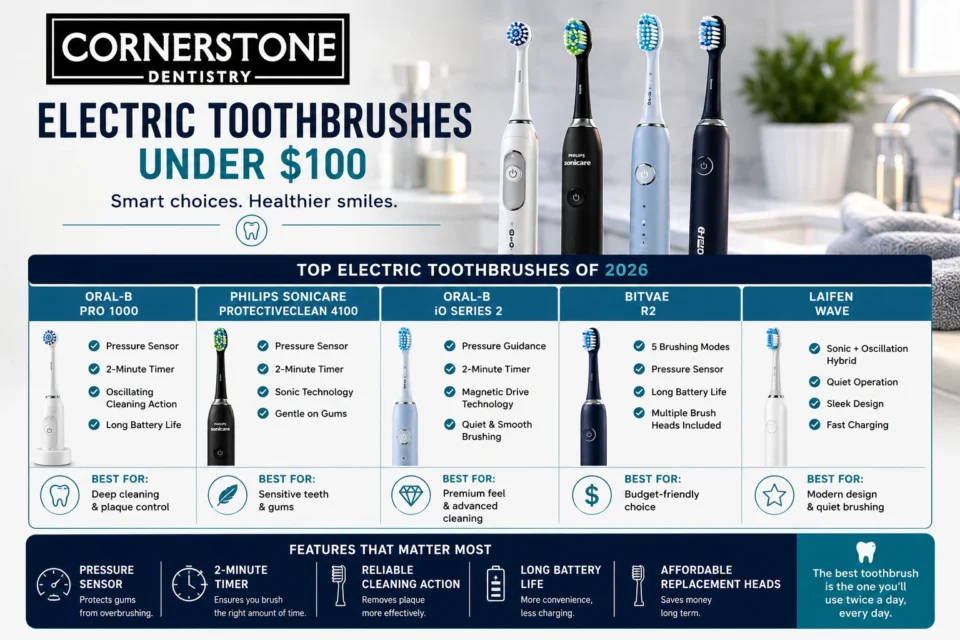
Best Design-Focused Option: Laifen Wave
Laifen Wave Electric Toothbrush
The Laifen Wave has gained attention for combining:
- sleek design
- quieter brushing
- oscillation + sonic movement hybrid
- modern aesthetics
It is part of the newer generation of “Apple-style” toothbrushes.
Best For:
- patients who care about design
- tech-focused users
- quieter brushing experience
Downsides:
- newer brand
- less long-term data
- replacement availability less established
This is one of the more interesting newer entries, but many dentists still trust Oral-B and Sonicare more clinically.
Professional Whitening vs. Mall Kiosks: What Does Teeth Whitening Really Cost?
options. On one side, there are dental offices offering professional whitening treatments that may cost several hundred dollars. On the…
Learn More
Expensive Does Not Always Mean Better
This is important.
A $350 toothbrush does not necessarily clean dramatically better than a good $60–$90 toothbrush.
Often, the extra money goes toward:
- apps
- AI tracking
- travel cases
- screens
- brushing analytics
- premium charging docks
The core cleaning technology often remains similar.
For most patients:
Consistent brushing technique matters far more than smart features.
The Biggest Mistake People Make
Honestly?
Using an electric toothbrush like a manual toothbrush.
Many people still:
- scrub aggressively
- rush
- brush for 30 seconds
- skip the gumline
Electric brushes work best when you:
- guide slowly
- let the brush do the work
- avoid hard pressure
- move methodically
That adjustment alone improves results significantly.
Electric Toothbrushes Help Certain Patients More Than Others
Some people benefit dramatically from switching.
Especially:
- braces patients
- gum disease patients
- people with arthritis
- heavy plaque builders
- aggressive brushers
- patients with recession
- children who resist brushing
Others already brush extremely well manually and may notice smaller improvements.
Replacement Heads Matter Financially
This is one hidden cost patients overlook.
Replacement heads should usually be changed every:
- 3 months
or sooner if frayed.
Annual replacement costs can add up quickly.
Approximate Yearly Costs:
- Oral-B heads: moderate
- Sonicare heads: often higher
- off-brand heads: cheaper but variable quality
Sometimes the “cheap” brush becomes expensive long term because of head pricing.
Kids and Electric Toothbrushes
Electric brushes can help children tremendously.
Especially kids who:
- rush brushing
- dislike brushing
- wear braces
- need timers and motivation
But parents still need to supervise.
An electric toothbrush is not magic.
Features That Actually Matter
If buying under $100, prioritize:
- pressure sensor
- timer
- comfortable handle
- battery life
- replacement head availability
Everything else is secondary for most people.
Features That Mostly Exist for Marketing
Many patients honestly do not need:
- Bluetooth tracking
- brushing maps
- AI coaching
- multiple whitening modes
- touchscreens
- subscription ecosystems
Some people enjoy those features.
But they rarely determine long-term oral health outcomes by themselves.
So Which Toothbrush Is Best?
Here’s the simplified version.
Best Overall Value
Oral-B Pro 1000 Electric Rechargeable Toothbrush
Reliable, effective, simple.
Best for Sensitive Teeth
Philips Sonicare ProtectiveClean 4100
Gentler brushing feel with excellent performance.
Best “Premium Feel” Under $100
Oral-B iO Series 2 Electric Toothbrush Starter Kit
Smoother and quieter than older Oral-B models.
Best Budget Pick
Bitvae R2 Rotating Electric Toothbrush
Good feature set for lower cost.
The Bottom Line
The best electric toothbrushes under $100 in 2026 are more than good enough for excellent oral hygiene when used correctly.
For most patients, the biggest improvements come from:
- brushing consistently
- using less pressure
- brushing long enough
- cleaning along the gumline properly
Not from buying the most expensive brush on the shelf.
At Cornerstone Dentistry in Anderson, Dr. Andrew Wilson and Dr. Dale Hardy usually encourage patients to focus less on flashy toothbrush marketing and more on building sustainable brushing habits that actually protect teeth and gums long term.
Upgrade Your Smile for Less
Find a top-rated electric toothbrush under $100 and give your daily routine the upgrade it deserves.