
Table of Contents
Written and medically reviewed by Dr. Andrew Wilson, DMD, Cornerstone Dentistry, Anderson. Last updated September 2026.
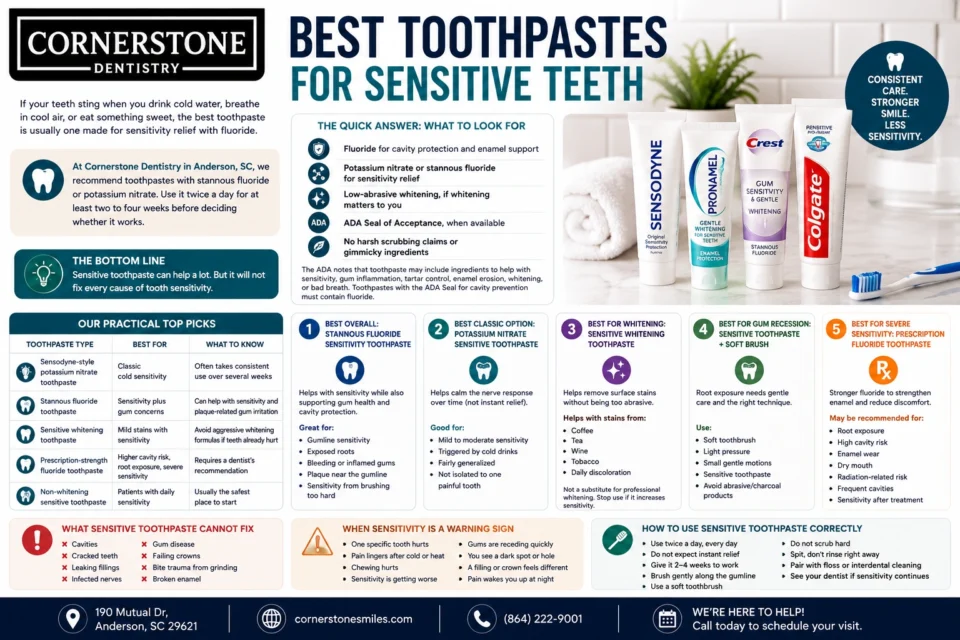
Quick answer: The best toothpaste for sensitive teeth contains stannous fluoride or potassium nitrate, plus fluoride for cavity protection. Our top picks are Sensodyne Repair & Protect and Crest Pro-Health Gum and Sensitivity (stannous fluoride), Colgate Sensitive and Sensodyne Pronamel (potassium nitrate), and prescription PreviDent 5000 Sensitive for severe cases. Use one twice a day for at least 2–4 weeks before judging results.
If your teeth sting when you drink cold water, breathe in cool air, or eat something sweet, a sensitivity toothpaste is usually the first thing we recommend at Cornerstone Dentistry in Anderson. According to the American Dental Association, twice-daily use of stannous fluoride or potassium nitrate toothpaste can reduce sensitivity pain.
Sensitive toothpaste helps a lot. But it won’t fix every cause of tooth sensitivity, so this guide also covers when to see a dentist instead.
Find the Right Toothpaste for Sensitive Teeth
Learn what works best for daily comfort and stronger enamel. Schedule a visit today.
Our Top 6 Picks at a Glance
| Pick | Toothpaste | Sensitivity ingredient | Best for |
|---|---|---|---|
| Best overall | Sensodyne Repair & Protect | Stannous fluoride 0.454% | Sensitivity plus cavity protection |
| Best for sensitive teeth and gums | Crest Pro-Health Gum and Sensitivity | Stannous fluoride 0.454% | Sensitivity with bleeding or irritated gums |
| Best classic option | Colgate Sensitive Complete Protection | Potassium nitrate 5% | Mild to moderate cold sensitivity |
| Best for enamel wear | Sensodyne Pronamel | Potassium nitrate 5% | Sensitivity from acidic foods and drinks |
| Best whitening for sensitive teeth | Colgate Sensitive Plus Whitening | Potassium nitrate 5% | Surface stains without extra sting |
| Best for severe sensitivity | Colgate PreviDent 5000 Sensitive (Rx) | 1.1% sodium fluoride + 5% potassium nitrate | Root exposure, high cavity risk; needs a prescription |
All six also contain fluoride for cavity protection. Ingredients are taken from each product’s FDA drug label; check the tube, since formulas can change.
1. Best Overall: Sensodyne Repair & Protect (Stannous Fluoride)
For most adults, a stannous fluoride toothpaste is the strongest first choice. It treats sensitivity and protects against cavities in one product.
Stannous fluoride helps block exposed dentin tubules, tiny channels that run from the tooth surface toward the nerve. When those channels are open, cold, sweet or acidic foods can trigger a sharp zing.
It’s a good fit if you have:
- sensitivity along the gumline
- exposed roots
- sensitivity after years of brushing too hard
2. Best for Sensitive Teeth and Gums: Crest Pro-Health Gum and Sensitivity (Stannous Fluoride)
If your gums bleed or feel tender and your teeth are sensitive, this one covers both. Its drug label lists it as anticavity, antigingivitis and antisensitivity.
Choose it if you notice:
- bleeding when you brush or floss
- plaque buildup near the gumline
- red or puffy gums along with sensitive teeth
If gums bleed for more than a couple of weeks, book a checkup. Toothpaste can support gum health, but it doesn’t treat gum disease.
3. Best Classic Option: Colgate Sensitive Complete Protection (Potassium Nitrate)
Potassium nitrate is the ingredient in most “sensitive” toothpastes. Instead of sealing the surface, it calms the nerve’s response over time, which is why it doesn’t work instantly.
This is a good choice if your sensitivity is:
- mild to moderate
- triggered by cold drinks
- spread across several teeth, not one painful tooth
4. Best for Enamel Wear: Sensodyne Pronamel (Potassium Nitrate)
Pronamel pairs 5% potassium nitrate with fluoride and is made for people whose sensitivity comes from enamel wear. That’s common if you sip coffee, soda, sparkling water, citrus or sports drinks through the day. Acids in food and drinks wear away enamel over time.
5. Best Whitening Toothpaste for Sensitive Teeth: Colgate Sensitive Plus Whitening (Potassium Nitrate)
This is where patients need to be careful. Some whitening toothpastes are too abrasive if you already have sensitivity, gum recession or enamel wear. A sensitivity whitening formula like this one keeps potassium nitrate for relief while lifting surface stains from:
- coffee and tea
- wine
- tobacco
It won’t change the natural color of your teeth the way professional whitening can. If it makes your teeth hurt more, stop using it and switch to a non-whitening sensitive formula.
6. Best for Severe Sensitivity: Colgate PreviDent 5000 Sensitive (Prescription)
If over-the-counter toothpaste isn’t enough, your dentist may prescribe a high-fluoride toothpaste. PreviDent 5000 Sensitive combines 1.1% sodium fluoride with 5% potassium nitrate and is prescription-only. Mayo Clinic notes dentists may suggest prescription fluoride at home to strengthen enamel and reduce pain.
We usually recommend it for:
- exposed roots
- high cavity risk or frequent cavities
- dry mouth
- sensitivity after dental treatment

How Long Does Sensitive Toothpaste Take to Work?
Most people notice relief after 2–4 weeks of brushing twice a day. The ADA notes desensitizing toothpaste usually needs several applications before sensitivity drops. If nothing has changed after a month, the cause may be something toothpaste can’t fix.
What Is Desensitizing Toothpaste?
Desensitizing (or “sensitivity”) toothpaste contains an ingredient that blocks pain signals from the tooth surface to the nerve. The two main ones are:
- Potassium nitrate: calms the nerve over a few weeks (Colgate Sensitive, Sensodyne Pronamel)
- Stannous fluoride: seals exposed dentin tubules and adds gum benefits (Sensodyne Repair & Protect, Crest Pro-Health Gum and Sensitivity)
Toothpastes with the ADA Seal that claim cavity protection must also contain fluoride, so look for fluoride on the label too.
How to Use Sensitive Toothpaste for the Best Results
- Brush twice a day with a soft toothbrush and light pressure.
- Use it every day for at least 2–4 weeks.
- Spit, but don’t rinse right away, so the ingredients stay on your teeth.
- Skip whitening products while sensitivity is flaring.
- Wait about an hour to brush after acidic foods or drinks.
- Replace your toothbrush or brush head every 3–4 months.
For one very sensitive spot, some patients dab a small amount of sensitive toothpaste on it with a clean finger before bed. Ask your dentist or hygienist if that makes sense for you.
What Sensitive Toothpaste Can’t Fix
Sensitive toothpaste helps with exposed dentin and mild, general sensitivity. It can’t repair:
- cavities
- cracked teeth
- leaking fillings or failing crowns
- infected nerves
- gum disease
- damage from grinding
Johns Hopkins Medicine lists cracked teeth, gum recession, grinding, acidic foods, whitening and hard brushing among the common causes of sensitivity. Mayo Clinic notes a dentist may treat exposed roots with fluoride, bonding, sealants or a gum graft. So if one tooth hurts sharply, don’t keep switching toothpaste for months.
When Tooth Sensitivity Is a Warning Sign
Schedule a dental visit if:
- one specific tooth hurts
- pain lingers after hot or cold
- chewing hurts
- sensitivity keeps getting worse
- your gums are receding quickly
- you see a dark spot or hole
- a filling or crown feels different
- pain wakes you up at night
Toothpastes We’re Cautious About
If your teeth are sensitive, be careful with:
- charcoal toothpaste
- highly abrasive whitening toothpaste
- “natural” toothpaste without fluoride
- baking soda used aggressively
- DIY lemon juice or peroxide brushing
- anything that promises instant, permanent repair
The Bottom Line
For most sensitive teeth, start with a fluoride toothpaste made for sensitivity: Sensodyne Repair & Protect or Crest Pro-Health Gum and Sensitivity if your gums are also a concern, Colgate Sensitive or Sensodyne Pronamel for classic cold sensitivity. Use it twice a day for a few weeks.
Don’t ignore sensitivity that’s in one tooth, sharp, getting worse, or tied to chewing. At Cornerstone Dentistry in Anderson, our dentists and hygienists can tell whether it’s coming from exposed roots, enamel wear, brushing habits, grinding, a cavity or a cracked tooth. Sometimes the fix is a new toothpaste. Sometimes toothpaste is only masking a problem that needs treatment.
Tooth Sensitivity Making Eating Painful?
Get personalized recommendations from a trusted dental team. Call now for help.
Frequently Asked Questions
Is Sensodyne or Colgate better for sensitive teeth?
Both work. The bigger difference is the ingredient: Sensodyne Repair & Protect uses stannous fluoride, while Colgate Sensitive and Sensodyne Pronamel use potassium nitrate. If your gums are also irritated, a stannous fluoride formula is usually the better start.
What is the best toothpaste for sensitive teeth and gums?
A stannous fluoride toothpaste such as Crest Pro-Health Gum and Sensitivity, which is labeled for cavities, gingivitis and sensitivity.
Can whitening toothpaste make sensitivity worse?
Yes, especially abrasive formulas. If you want whitening, choose a sensitivity whitening toothpaste like Colgate Sensitive Plus Whitening and stop if pain increases.
How long does it take for sensitive toothpaste to work?
Usually 2–4 weeks of twice-daily brushing. It needs several applications before sensitivity improves.
Do I need prescription toothpaste for sensitive teeth?
Only if over-the-counter options don’t help, or you have exposed roots or a high cavity risk. Your dentist can prescribe a high-fluoride option like PreviDent 5000 Sensitive.
When is tooth sensitivity a sign of a bigger problem?
When it’s in one tooth, lingers after hot or cold, hurts when you chew, or keeps getting worse. Those can point to a cavity, crack or gum problem.
References
- American Dental Association. Toothpastes. ADA Library.
- American Dental Association. Sensitive Teeth. MouthHealthy.
- Mayo Clinic. Sensitive teeth: What treatments are available?
- Johns Hopkins Medicine. Sensitive Teeth: Why They Hurt and How to Stop the Pain.
- U.S. National Library of Medicine, DailyMed. Sensodyne Repair and Protect (stannous fluoride) drug label.
- DailyMed. Crest Pro-Health Gum and Sensitivity (stannous fluoride) drug label.
- DailyMed. Colgate Sensitive Complete Protection (potassium nitrate, sodium fluoride) drug label.
- DailyMed. Sensodyne Pronamel (potassium nitrate, sodium fluoride) drug label.
- DailyMed. Colgate Sensitive Plus Whitening (potassium nitrate, sodium fluoride) drug label.
- DailyMed. PreviDent 5000 Sensitive (sodium fluoride, potassium nitrate) prescription label.
- American Dental Association. Dietary Acids and Your Teeth. MouthHealthy.
The content of this blog is for general information and isn’t a substitute for professional dental advice. Talk with your dentist about your situation.