
Table of Contents
Dental emergencies are stressful enough without wondering what the bill is going to look like.
A lot of patients in Anderson call dental offices asking some version of the same question:
“How much is this emergency visit actually going to cost me?”
And usually, they’re calling while:
- dealing with severe tooth pain
- trying to get through work
- worried about infection
- unsure whether they need immediate treatment
- wondering if insurance will help
- hoping the problem is something small
Here’s the honest answer:
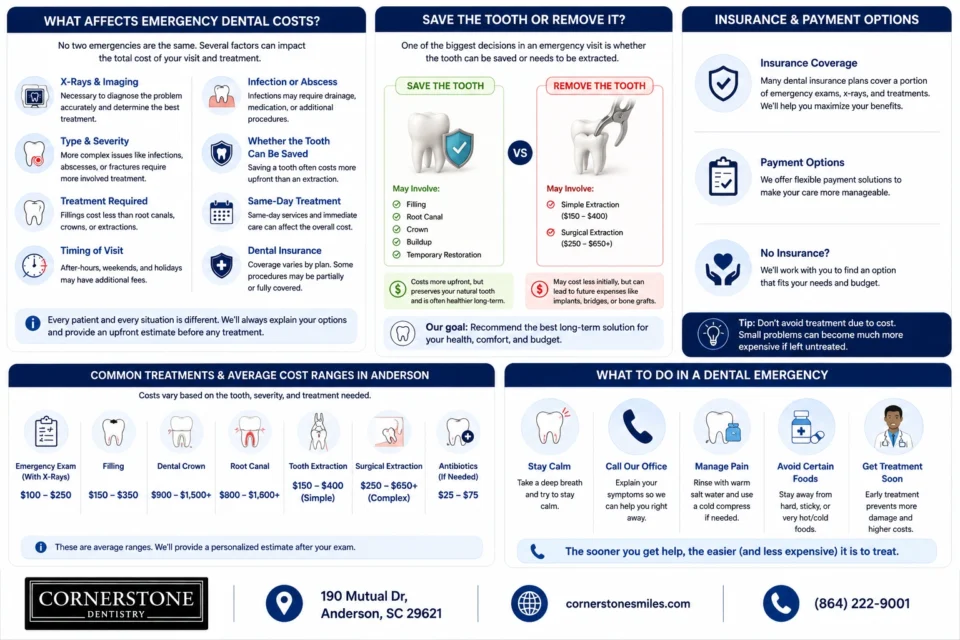
Most emergency dental visits in Anderson fall somewhere between about $75 and $350 for the initial evaluation, depending on what’s needed during that first appointment.
But the total cost can vary quite a bit after that depending on:
- x-rays
- treatment required
- whether infection is present
- whether the tooth can be saved
- whether you need same-day treatment
- whether you have dental insurance
And that’s where confusion usually starts.
Many patients think the “emergency fee” covers the entire problem. In reality, the emergency exam is often just the first step in diagnosing what’s happening and deciding what treatment makes sense.
Here’s what we usually tell patients at Cornerstone Dentistry:
The emergency visit is less about “fixing everything immediately” and more about getting you out of pain, identifying the problem, and helping you understand your options.
Let’s walk through what emergency dental visits typically cost in Anderson, South Carolina — and what tends to raise or lower the final bill.
Need an Emergency Dentist Today?
Don't wait in pain. Schedule your same-day emergency dental visit and get relief as soon as possible.
What Counts as a Dental Emergency?
Not every dental problem requires immediate care.
But some situations should not wait several weeks either.
Common Reasons Patients Seek Emergency Dental Care
Patients usually come in for:
- severe toothaches
- cracked or broken teeth
- swelling or infection
- knocked-out teeth
- broken crowns or fillings
- abscesses
- gum swelling
- pain when biting
- sudden sensitivity
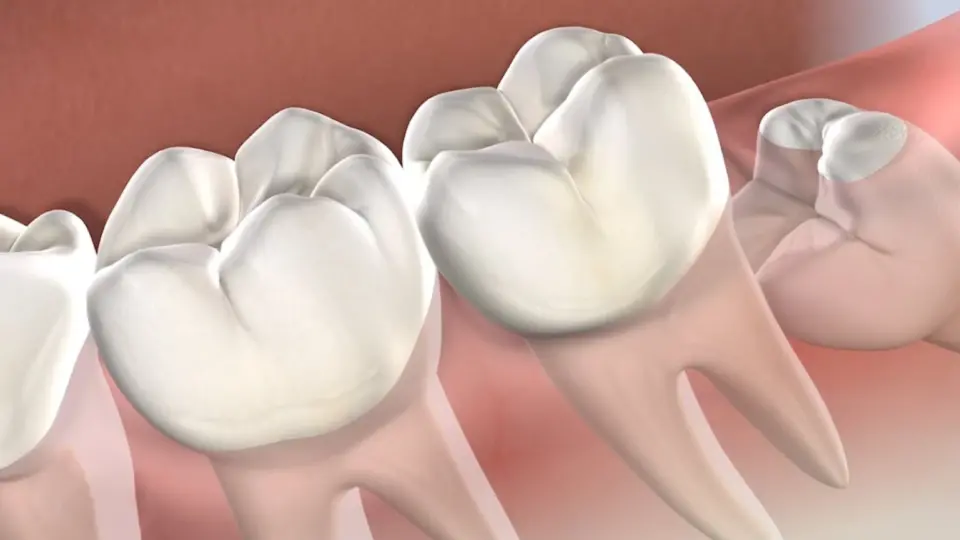
- wisdom tooth pain
- dental trauma
- uncontrolled bleeding
Some of these are true emergencies.
Others are urgent but not dangerous.
Part of the emergency exam is determining which category you’re in.
Typical Emergency Exam Costs in Anderson
Most walk-in or same-day emergency exams in Anderson generally include:
- an evaluation
- limited x-rays
- diagnosis
- treatment recommendations
Common Price Range
Emergency Exam Only
Typically:
- $75–$150
Emergency Exam With X-Rays
Typically:
- $100–$250
Emergency Visit With Minor Same-Day Treatment
Typically:
- $150–$350+
That may include:
- smoothing a broken tooth
- temporary treatment
- draining minor swelling
- adjusting a bite
- recementing a crown
- placing medication
Every office structures fees differently, so there is no universal pricing model.
Why Emergency Dental Costs Vary So Much
This is where many patients become frustrated.
Two people may both say:
“I have a toothache.”
But one may need:
- a simple filling
…while another needs:
- a root canal
- crown
- antibiotics
- extraction
The symptom sounds similar.
The treatment cost is completely different.
X-Rays Are Usually Necessary
Patients sometimes hesitate when they hear x-rays are recommended during an emergency visit.
But most emergency dental problems cannot be diagnosed accurately without imaging.
Especially if the issue involves:
- infection
- cracks
- root damage
- bone loss
- impacted teeth
- abscesses
Without x-rays, dentists are often guessing.
And guessing is how problems get missed.
The Biggest Cost Difference: Saving the Tooth vs. Removing It
This is often the fork in the road financially.
If the Tooth Can Be Saved
Treatment may involve:
- filling
- crown
- root canal
- buildup
- temporary restoration
This usually costs more upfront.
But preserving natural teeth is often healthier long term when possible.
If the Tooth Needs Extraction
An extraction may initially cost less than saving the tooth.
Simple extractions in Anderson may range roughly:
- $150–$400
More complex surgical extractions can cost significantly more.
But here’s the part patients sometimes overlook:
Removing a tooth often creates future costs too.
Missing teeth can lead to:
- shifting teeth
- bite changes
- chewing problems
- bone loss
- future implant or bridge needs
Sometimes extraction is absolutely the right call.
But not always.
Root Canal Emergencies Are Common
Many severe toothaches end up involving the nerve inside the tooth.
If pain becomes especially intense after hours, knowing what should I do if I have a severe toothache at night can help you manage symptoms safely until you can receive professional care.
That’s where root canals often enter the conversation.
Typical Root Canal Cost Ranges
Depending on the tooth:
- front teeth are generally less expensive
- molars are more complex and usually cost more
In Anderson, root canals commonly range:
- $800–$1,800+
And most teeth needing root canals also need crowns afterward.
That’s why emergency dental estimates can sometimes feel surprisingly high.
Patients often arrive expecting:
“Maybe I just need antibiotics.”
But antibiotics alone usually do not fix the actual source of tooth infections.
Antibiotics Alone Rarely Solve Dental Infections
This is important.
Many people hope an emergency dentist can simply prescribe antibiotics and make the problem disappear.
Sometimes antibiotics are necessary — especially with:
- swelling
- facial infection
- fever
- spreading inflammation
But antibiotics usually only calm the infection temporarily.
The source still needs treatment.
That may mean:
- root canal
- extraction
- drainage
- periodontal treatment
Without addressing the cause, the infection often returns.
Sometimes worse.
Walk-In Visits vs. Scheduled Emergency Appointments
Some offices accept true walk-ins.
Others reserve same-day emergency slots but still require calling ahead.
That distinction matters because:
- after-hours care may cost more
- weekend visits may cost more
- immediate treatment availability varies
Some emergency clinics charge separate:
- emergency access fees
- after-hours surcharges
- weekend premiums
Traditional dental offices may structure things differently.
Insurance Coverage for Emergency Dental Visits
This is one of the biggest sources of confusion.
Many dental insurance plans help cover:
- emergency exams
- x-rays
- extractions
- fillings
- root canals
But coverage varies widely.
Patients are often surprised to learn:
- deductibles may apply
- annual maximums matter
- some plans have waiting periods
- crowns may only be partially covered
- out-of-network fees can increase costs
And unfortunately, dental insurance maximums often lag far behind modern treatment costs.
Why Some Emergency Visits Are Cheap — and Others Become Expensive
Sometimes the emergency itself is relatively minor.
Examples:
- loose crown recement
- small filling replacement
- bite adjustment
- minor chip smoothing
Those visits may stay fairly affordable.
But costs rise quickly when the issue involves:
- infection
- severe fractures
- nerve damage
- multiple teeth
- cosmetic reconstruction
- surgical treatment
The emergency fee itself is often not the expensive part.
The actual condition is.
Delaying Emergency Dental Care Usually Increases Cost
This is something dentists see constantly.
Patients often wait because:
- they hope the pain stops
- finances are tight
- they are nervous
- work schedules are difficult
- they think antibiotics alone will fix it
And sometimes the pain does temporarily improve.
But the underlying issue frequently worsens quietly underneath.
A small cavity may become:
- a root canal
- then a crown
- then an extraction
A cracked tooth may become non-restorable.
An infection may spread.
This does not mean every toothache is catastrophic.
But waiting tends to reduce treatment options over time.
Some Dental Emergencies Require Immediate Attention
Certain symptoms should not be ignored.
Patients dealing with painful oral lesions may also benefit from understanding urgent management of permanent cold sores in emergency dentistry and when those symptoms require prompt professional attention.
Seek Prompt Care If You Have:
- facial swelling
- difficulty swallowing
- fever with dental pain
- uncontrolled bleeding
- trauma from an accident
- a knocked-out permanent tooth
- swelling near the eye
- severe throbbing pain that keeps worsening
These situations can become serious quickly.
What Happens During an Emergency Dental Visit?
Patients are often nervous because they do not know what to expect.
Most emergency appointments are fairly straightforward.
Typically:
- discussion of symptoms
- exam
- x-rays
- diagnosis
- pain management recommendations
- treatment options discussion
Some patients receive same-day treatment.
Others need a follow-up appointment depending on:
- complexity
- scheduling
- swelling
- treatment type
Questions Worth Asking During an Emergency Visit
Patients usually feel more confident when they ask:
- What exactly is causing the pain?
- Is this infection serious?
- Can the tooth be saved?
- What happens if I wait?
- What are my treatment options?
- Is there a lower-cost temporary solution?
- What will insurance likely cover?
- Is this likely to come back?
Those are reasonable questions.
Good emergency dental care should reduce uncertainty — not increase it.
The Cheapest Emergency Option Is Not Always the Best Long-Term Option
This is where patients sometimes feel stuck.
A quick extraction may cost less upfront than saving a tooth.
But over years, replacing missing teeth can become far more expensive.
On the other hand:
- not every tooth is savable
- not every patient wants extensive treatment
- sometimes extraction truly is the most practical option
There is no universal answer.
The right decision depends on:
- tooth condition
- long-term goals
- finances
- overall health
- predictability of success
Dental Anxiety Often Makes Emergencies Worse
A lot of emergency patients delayed care because of fear.
That is extremely common.
Many people:
- hate dental numbness
- fear bad news
- had negative experiences years ago
- worry about judgment
- are embarrassed they waited
But emergency dentists see these situations every day.
The goal is usually not to lecture patients.
It is to stabilize the situation and help them move forward.
The Bottom Line
Emergency dental visits in Anderson typically range from about $75 to $350 for the initial evaluation, but total costs depend heavily on what is actually causing the problem.
Simple fixes may stay relatively affordable.
More advanced issues involving infection, root canals, crowns, or extractions can increase costs quickly.
The most important thing is getting an accurate diagnosis early — before a manageable problem becomes a much larger one.
At Cornerstone Dentistry, Dr. Andrew Wilson and Dr. Dale Hardy spend a lot of time helping emergency patients understand:
- what’s happening
- how urgent it is
- what options exist
- what costs to realistically expect
- and whether immediate treatment is truly necessary
Because when patients are in pain, clarity matters almost as much as treatment itself.
Emergency Dentist Fees Worrying You?
Get fast, affordable walk-in dental care. Call now for immediate treatment and transparent pricing.