Table of Contents
Dentistry has changed more in the last decade than in the several before it, not just in what’s possible, but in how much more comfortable and predictable a visit actually is. Here’s what’s genuinely different now, organized around what you’d actually notice as a patient.
Catching problems earlier
Digital X-rays use meaningfully less radiation than older film X-rays and deliver results instantly instead of requiring processing time. Intraoral cameras let you see exactly what your dentist sees in real time, and 3D scans support more precise treatment planning for anything from an implant to a night guard.
Increasingly, AI-assisted diagnostic tools are being used to flag potential cavities, early bone loss, or other subtle changes in imaging that can be easy to miss — some tools can even help estimate future risk based on a patient’s history, catching a developing problem well before it becomes a bigger one.
Treating with less discomfort
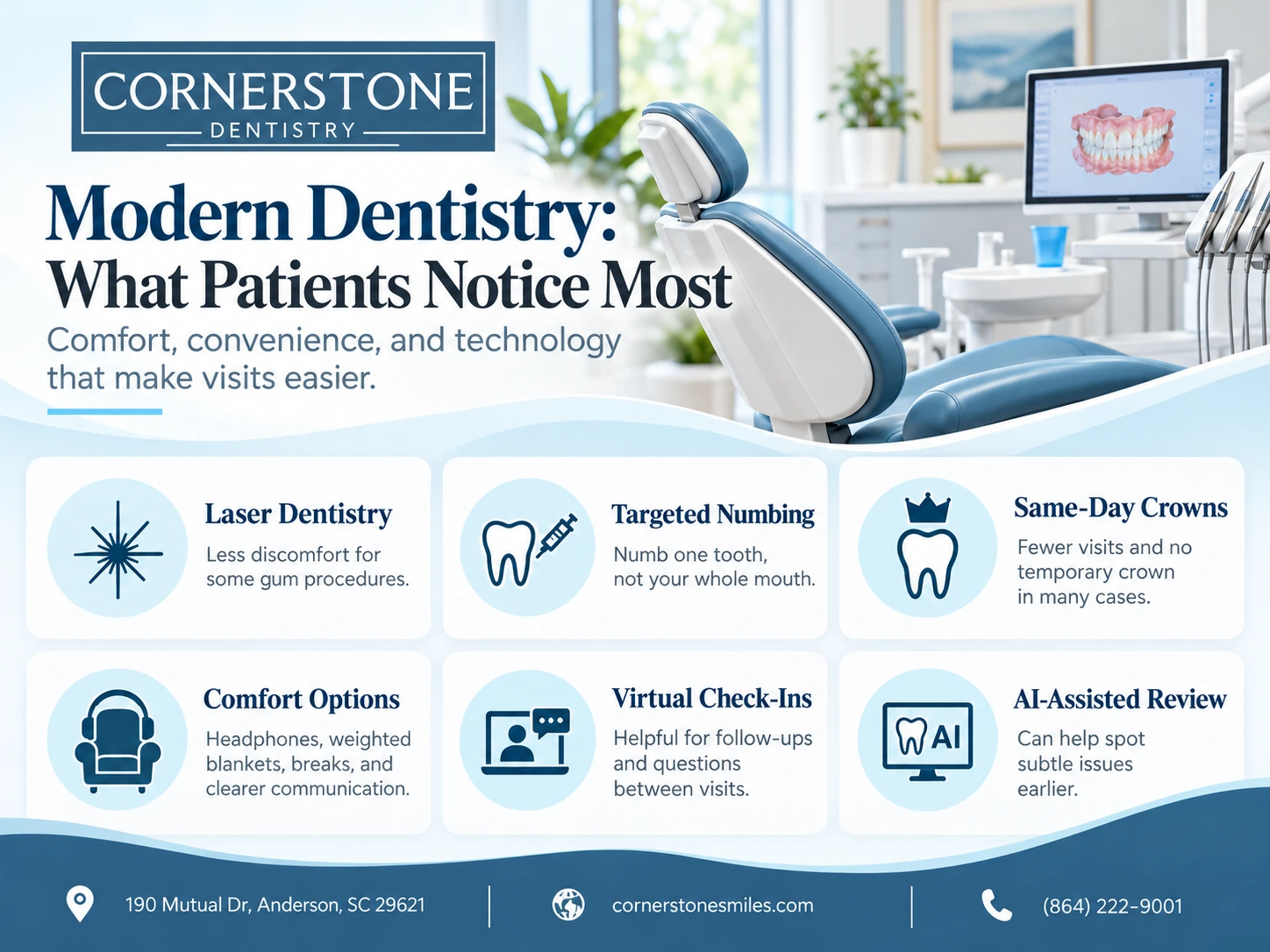
Laser treatment can now handle certain gum procedures with minimal discomfort and no stitches, computer-guided anesthesia devices can numb a single targeted tooth rather than an entire side of the mouth, and CAD/CAM technology allows many crowns to be designed and milled in-office the same day — no more temporary crown, no second visit, no multi-week wait on a lab.
Air abrasion can remove some small cavities without a drill at all. None of this replaces careful, hands-on dentistry, but it does mean fewer visits and less lingering numbness for a growing number of procedures.
Redesigning the whole visit around your comfort
Dental anxiety is real, and it’s being treated more deliberately now, not just talked around. The actual sources of fear are fairly well understood — loss of control, a past bad experience, sensory overload, anticipating discomfort, and feeling unheard — and a calmer patient genuinely experiences less discomfort and lets the dentist work more precisely.
In practice, that shows up as things like clear step-by-step explanation before any procedure (“tell-show-do”), calming sensory choices (softer lighting, quieter equipment, optional music), small moments of patient control (a blanket, choosing when to take a break), and simply reading body language like tense shoulders, gripped hands, shallow breathing, before a patient has to say anything.
Comfort options like noise-canceling headphones, weighted blankets, and nitrous oxide are far more standard now than they used to be.
Dental care beyond the chair
Virtual visits are a real, current option for preliminary evaluations, post-procedure check-ins, and general education, genuinely useful if you’re managing a follow-up question or live somewhere that makes an in-person visit harder to arrange on short notice.
On the diagnostic side, AI-assisted review of X-rays can help flag patterns a human eye might miss, supporting earlier detection of decay or gum disease. None of this replaces an in-person exam for anything that needs hands-on treatment, but as a layer of ongoing communication between visits, it’s a genuine and growing part of modern dental care.
Frequently asked questions
Does a same-day crown work as well as a traditional one?
For most cases, yes — CAD/CAM-milled crowns use the same durable materials as lab-made ones; the difference is mainly in turnaround time, not the final result.
Is a virtual dental appointment ever a substitute for an in-person visit?
Not for anything requiring hands-on treatment — it’s best used for preliminary questions, follow-up check-ins, or general guidance, with an in-person exam still the right call for diagnosis or procedures.
What actually helps most with dental anxiety today?
A combination — clear communication about what’s happening and why, small amounts of patient control during the visit, and, when needed, sedation options discussed openly beforehand rather than sprung on you.
Curious what modern dentistry actually looks like at our office? Call Cornerstone Dentistry at (864) 222-9001 or schedule online. We’re happy to walk you through what a visit here is really like before you come in.