
Table of Contents
A small gap between the front teeth can bother people more than almost any other cosmetic dental issue.
Even when the teeth are healthy, patients often say things like:
“It’s the first thing I notice in photos.”
“I’ve always been self-conscious about it.”
“I don’t necessarily want perfect teeth — I just want the gap less noticeable.”
And one of the biggest questions patients in Anderson ask is:
“Should I fix the gap with veneers or bonding?”
Here’s the short answer:
Bonding is usually less expensive and more conservative. Veneers are usually more durable, stain-resistant, and dramatic cosmetically.
But the right choice depends on:
- the size of the gap
- your bite
- tooth shape
- enamel condition
- long-term expectations
- budget
- and how “perfect” you want the final result to look
Here’s what we usually tell patients at Cornerstone Dentistry:
The best cosmetic dentistry is not about making teeth look fake-perfect. It’s about making changes that fit your face, smile, and long-term goals naturally.
And sometimes, the simpler option is actually the smarter one.
Let’s break down the real differences between veneers and bonding for front tooth gaps — including cost, longevity, limitations, and when each option tends to make the most sense.
Close Your Front Tooth Gap Today
Discover whether veneers or bonding is the right solution. Call now to book your personalized cosmetic dental consultation.
Why Front Tooth Gaps Happen
A front tooth gap — called a diastema — can happen for several reasons.
Some people naturally have:
- smaller teeth
- larger jaw spacing
- inherited spacing patterns
Other gaps develop because of:
- shifting teeth
- gum disease
- tongue habits
- missing teeth elsewhere
- bite changes
- orthodontic relapse
That distinction matters because:
Not every cosmetic gap problem is purely cosmetic.
Sometimes the gap is stable and harmless.
Other times, it signals underlying bite or gum issues that should be evaluated first.
What Is Dental Bonding?
Bonding uses tooth-colored composite resin to reshape the teeth and close the gap visually.
The dentist sculpts the material directly onto the tooth and hardens it with a curing light.
Bonding Is Often Popular Because It:
- costs less upfront
- usually requires little or no drilling
- can often be completed in one visit
- preserves natural tooth structure
- looks surprisingly natural when done well
For small-to-moderate gaps, bonding can work extremely well.
Typical Bonding Costs in Anderson
Bonding for front tooth gaps often ranges roughly:
- $300–$800 per tooth
But costs vary depending on:
- how many teeth are involved
- cosmetic complexity
- edge reshaping
- bite adjustments
- staining correction
- artistic detail required
A simple single-tooth adjustment is very different from a full smile redesign.
What Are Veneers?
Veneers are thin porcelain shells bonded to the front surface of the teeth.
They are custom-made in a dental lab and designed to permanently alter:
- tooth shape
- size
- color
- symmetry
- spacing
Veneers are usually more comprehensive than bonding.
They can create major smile transformations — not just gap closure.
Typical Veneer Costs in Anderson
Porcelain veneers often range:
- $1,000–$2,500+ per tooth
That price reflects:
- custom lab fabrication
- cosmetic design
- higher-end materials
- multiple appointments
- detailed smile planning
Patients are sometimes surprised to learn that cosmetic veneers are among the most technique-sensitive procedures in dentistry.
The artistic component matters enormously.
Bonding Is More Conservative
This is one of bonding’s biggest advantages.
In many cases, little to no natural enamel must be removed.
That means:
- the procedure is often reversible or minimally invasive
- healthy tooth structure is preserved
- future options remain more open
For younger patients especially, many dentists prefer starting conservatively when possible.
Because once enamel is removed for veneers, that process generally cannot be undone completely.
Veneers Usually Last Longer
This is one reason veneers cost more.
Porcelain veneers are generally:
- more stain-resistant
- stronger
- more color stable
- longer lasting than bonding
Typical Lifespan Estimates
Bonding
Often:
- 4–8 years, sometimes longer with excellent care
Veneers
Often:
- 10–20 years or more in good conditions
That does not mean veneers never fail.
But bonding tends to chip, stain, and wear faster over time.
Especially in patients who:
- drink coffee frequently
- smoke
- grind teeth
- bite fingernails
- chew ice
- have strong bite pressure
Bonding Usually Looks Good — But Veneers Usually Look Better
This is the honest cosmetic reality.
Modern bonding can look extremely natural in skilled hands.
But porcelain generally reflects light more like natural enamel.
That creates:
- better translucency
- more depth
- more lifelike esthetics
- better long-term polish retention
For small corrections, the difference may be minor.
For major cosmetic smile makeovers, veneers often produce a more refined result.
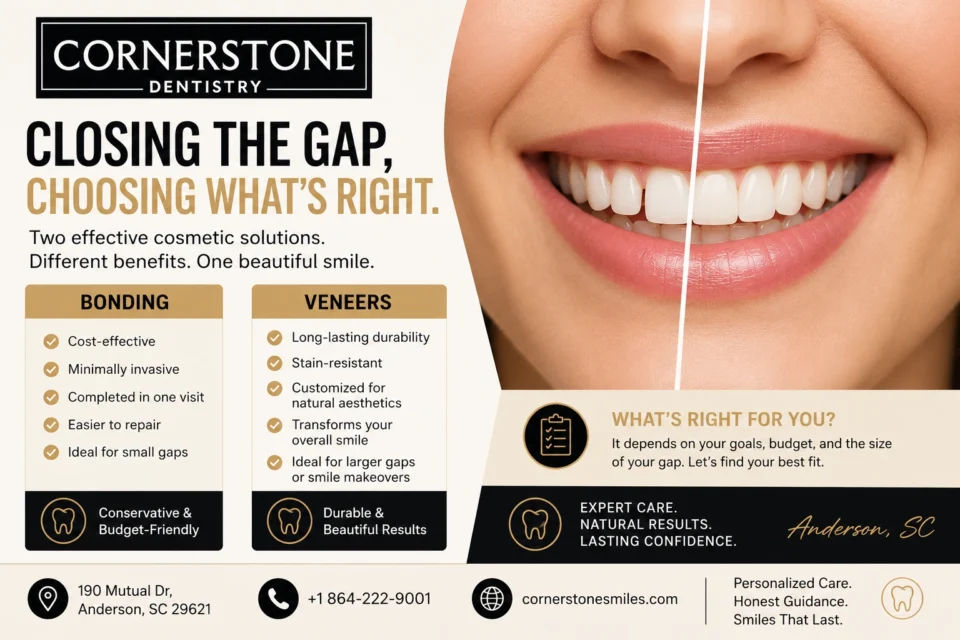
The Size of the Gap Matters
Tiny gaps may not justify veneers at all.
In fact, veneers for a very small gap can sometimes become unnecessarily aggressive treatment.
Bonding Often Works Best For:
- small gaps
- younger patients
- conservative cosmetic goals
- budget-conscious treatment
- patients unsure about permanent cosmetic work
Veneers Often Work Better For:
- larger gaps
- multiple cosmetic concerns
- uneven tooth shapes
- discoloration
- worn teeth
- smile redesign cases
Sometimes the gap itself is not the real issue.
Sometimes patients also want:
- whiter teeth
- better symmetry
- shape correction
- longer teeth
- smile balancing
That is where veneers often shine.
Orthodontics May Be Better Than Either Option
This is important.
Some gaps are better treated with:
- Invisalign
- braces
- orthodontic movement
Especially when:
- spacing exists across multiple teeth
- the bite is unstable
- teeth flare outward
- crowding also exists
Simply widening teeth with bonding or veneers can occasionally create proportions that look bulky or unnatural.
Good cosmetic dentistry should evaluate whether the teeth are actually in the right position before changing their shape.
Bonding Is Easier to Repair
This is one practical advantage many patients appreciate.
If bonding chips:
- repairs are often simple
- touch-ups are relatively affordable
- small corrections can usually be done chairside
Porcelain veneers can also be repaired sometimes, but major fractures often require full replacement.
Veneers Require More Commitment
Patients sometimes do not realize this upfront.
Once veneers are placed, they usually require lifelong maintenance and eventual replacement over decades.
That does not mean veneers are bad.
It just means:
Veneers are a long-term cosmetic commitment.
Many patients are perfectly happy with that.
Others prefer a more conservative starting point like bonding.
Gum Health Matters More Than Patients Realize
Before cosmetic work, dentists evaluate:
- gum inflammation
- recession
- bone support
- oral hygiene
- bite habits
Because even beautiful cosmetic work can fail if the gums are unhealthy.
For example:
- recession can expose veneer edges
- inflammation can affect appearance
- grinding can shorten lifespan dramatically
Sometimes improving gum health changes the cosmetic plan entirely.
The Cheapest Cosmetic Dentistry Can Become Expensive Later
This is especially true with rushed cosmetic work.
Poorly done bonding may:
- stain quickly
- chip repeatedly
- look uneven
- trap plaque
- discolor at the edges
Poorly planned veneers can create:
- bulky teeth
- gum irritation
- bite problems
- unnatural appearance
Cosmetic dentistry is heavily dependent on planning and execution.
The difference between average and excellent work is often significant.
Social Media Creates Unrealistic Expectations
This is becoming a major issue in cosmetic dentistry.
Many online smile transformations are:
- heavily filtered
- over-whitened
- edited
- photographed under perfect lighting
Natural teeth have:
- texture
- translucency
- variation
- character
A great cosmetic result should still look believable in normal life — not just on Instagram.
Questions Worth Asking Before Choosing
Before deciding between bonding and veneers, ask:
- How large is the gap actually?
- Would orthodontics create a healthier result?
- How long should I expect this to last?
- Will the teeth look bulky if the gap is closed cosmetically?
- How much enamel would need removal?
- Am I okay with future maintenance and replacement?
- Do I want subtle improvement or dramatic change?
- Am I trying to fix just spacing — or my whole smile?
Those answers usually clarify the best direction pretty quickly.
So Which Is Better?
Honestly, neither is universally “better.”
Bonding is often better when:
- the gap is small
- the teeth are otherwise healthy
- minimal drilling matters
- budget matters
- conservative treatment is preferred
Veneers are often better when:
- multiple cosmetic issues exist
- the patient wants maximum esthetics
- stain resistance matters
- long-term polish and durability matter
- larger smile redesign goals exist
A good cosmetic consultation should explain both options honestly — including limitations, maintenance, and long-term tradeoffs.
The Bottom Line
For front tooth gaps, bonding is usually the more conservative and affordable option, while veneers often provide greater durability and more dramatic cosmetic refinement.
The right choice depends on:
- the size of the gap
- your bite
- your smile goals
- enamel health
- and how permanent you want the change to be
At Cornerstone Dentistry in Anderson, Dr. Andrew Wilson and Dr. Dale Hardy help patients compare cosmetic options realistically — not just aesthetically.
Because the goal is not simply closing a gap.
It is creating a smile that still feels natural, healthy, and comfortable years from now.
Not Sure Which Treatment Fits You?
Every smile is different. Get honest recommendations and professional care to achieve natural-looking results.