
Table of Contents
A lot of Anderson workers do not realize they are grinding their teeth.
They just know they wake up with:
- sore jaws
- headaches
- sensitive teeth
- chipped enamel
- tightness near the temples
- neck tension
- teeth that feel “tired” in the morning
Then we ask a few questions:
“Are you under more stress lately?”
“Do you work shifts?”
“Are you clenching during the day?”
“Do you drink more caffeine to get through long hours?”
“Has your sleep changed?”
That is when the pattern starts to make sense.
Industrial and manufacturing work does not automatically cause teeth grinding. But stress, shift work, poor sleep, physical strain, and high-alert job environments can make clenching and grinding more likely or more noticeable.
In Anderson, where many families are connected to manufacturing, production, logistics, healthcare, education, and shift-based work, this is a real conversation — not just a dental theory.
Jaw Pain From Workplace Stress?
Get help for teeth grinding before it leads to bigger dental problems. Call today.
What is teeth grinding?
Teeth grinding is also called bruxism.
It can happen while you are awake or asleep. Some people grind side-to-side. Others clench their teeth tightly without much movement.
The American Dental Association describes teeth grinding as something that may be caused by stress, anxiety, sleep disorders, an abnormal bite, or missing or crooked teeth.
Mayo Clinic also notes that bruxism can be linked with stress, sleep-related disorders, sleep apnea, GERD, ADHD, and certain medical conditions. Severe cases may damage teeth, dental work, jaws, and the TMJ joints.
Why Anderson workers may notice it more
Anderson County has a strong manufacturing and industrial base. Anderson County Economic Development describes its role in supporting industry, workforce development, and business growth locally.
That matters because many industrial jobs involve conditions that can feed into clenching patterns:
- production pressure
- shift changes
- repetitive physical work
- overtime
- noise and constant alertness
- responsibility for equipment or quality control
- interrupted sleep
- caffeine use
- job-related stress
- physical tension in the neck, shoulders, and jaw
Again, the job itself is not “bad for your teeth.” The issue is how the body responds to long periods of stress and tension.
How stress turns into jaw clenching
When people think about stress, they usually think about mood.
But stress is physical.
Your shoulders rise. Your neck tightens. Your breathing changes. Your hands grip harder. Your jaw may stay locked without you noticing.
Some patients clench while:
- driving to work
- operating equipment
- concentrating
- reading gauges or screens
- lifting or bracing
- dealing with conflict
- trying to fall asleep
- recovering after a long shift
Daytime clenching is often a habit. Nighttime grinding is more complicated and may involve sleep patterns, airway issues, medication, stress, or nervous system activity.
That is why a nightguard can help protect the teeth, but it may not solve the whole cause.
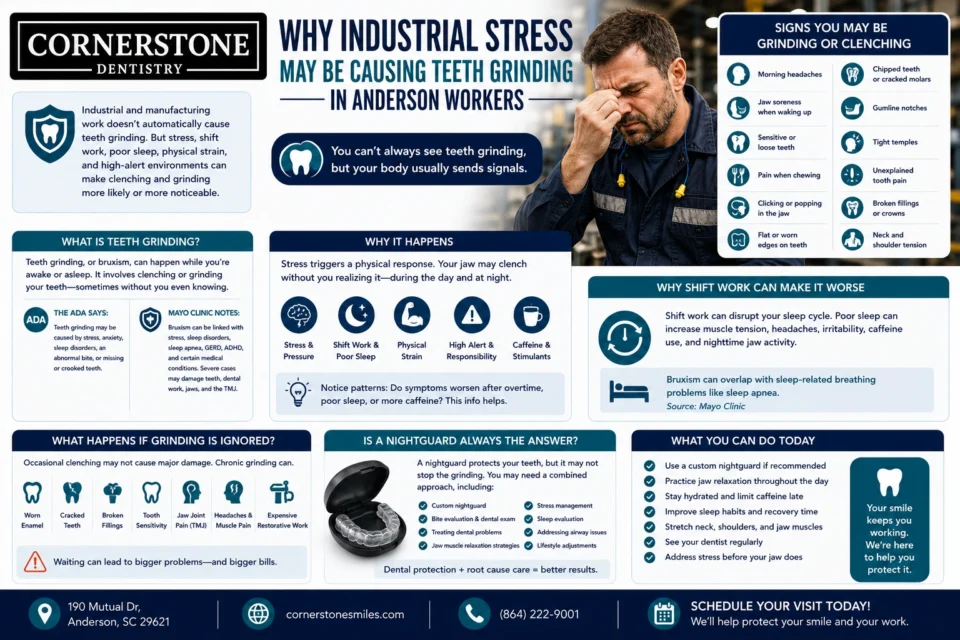
Signs you may be grinding or clenching
You may not hear grinding at all. Many people never do.
Watch for:
- morning headaches
- jaw soreness when waking up
- teeth that feel sensitive or loose
- pain when chewing
- clicking or popping in the jaw
- flat or worn edges on teeth
- chipped front teeth
- cracked molars
- gumline notches
- tight temples
- unexplained tooth pain
- broken fillings or crowns
A dentist can often see wear patterns before the patient realizes what is happening.
Are You Singing the Toothache Blues?
Are you or a loved one suffering from the toothache blues? Don’t wait around in pain for the problem to…
Learn More
Why shift work can make grinding worse
Shift work can affect sleep quality, especially rotating shifts or overnight schedules.
Poor sleep does not just make people tired. It can increase muscle tension, caffeine use, irritability, headaches, and nighttime jaw activity.
If you work second or third shift and wake up with jaw pain, the issue may not be just your teeth. It may be your sleep rhythm, stress load, and recovery time.
This is also why we ask about snoring, waking up gasping, or feeling exhausted after a full night of sleep. Bruxism can sometimes overlap with sleep-related breathing problems, including sleep apnea. Mayo Clinic lists sleep-related disorders such as sleep apnea among conditions linked with bruxism.
Why caffeine, nicotine, and energy drinks matter
This is the part many adults do not love hearing.
If you are using coffee, energy drinks, nicotine, or other stimulants to get through long shifts, your jaw may be paying for it.
These do not affect everyone the same way. But for some people, they can increase muscle tension, make sleep lighter, or make clenching worse.
That does not mean you have to quit everything overnight. But if your jaw pain is getting worse, it is worth noticing patterns:
- Do symptoms spike after overtime weeks?
- Do they worsen after more energy drinks?
- Is clenching worse during stressful production periods?
- Is jaw soreness worse after poor sleep?
That information helps.
What happens if grinding is ignored?
Occasional clenching may not cause major damage.
Chronic grinding can.
Over time, it may lead to:
- worn enamel
- cracked teeth
- broken fillings
- damaged crowns
- tooth sensitivity
- gum recession-like notching
- jaw joint pain
- headaches
- muscle soreness
- expensive restorative work
This is where waiting can cost more later.
A custom nightguard is not cheap, but it is usually less expensive than replacing cracked teeth, crowns, or broken dental work.
Is a nightguard always the answer?
A nightguard may be the right answer if your teeth are showing wear or you are breaking dental work.
But it is not magic.
A nightguard protects teeth from damage. It does not necessarily stop the brain or muscles from trying to grind.
That means some patients need more than just an appliance. Depending on the situation, the plan may include:
- a custom nightguard
- bite evaluation
- checking for cracked teeth
- treating active dental problems
- jaw muscle relaxation strategies
- stress management
- sleep evaluation
- reducing evening caffeine
- physical therapy for jaw or neck tension
- medical evaluation if sleep apnea signs are present
The right treatment depends on what is driving the grinding.
Store-bought nightguard vs. custom nightguard
Store-bought guards can be tempting because they are cheaper.
They may help short-term for some people, but they have limits.
| Option | Pros | Cons |
| Store-bought nightguard | Lower cost, easy to try | Bulky, less precise, may worsen bite discomfort for some |
| Custom dental nightguard | Better fit, more durable, designed for your bite | Higher upfront cost |
| No guard | No cost today | Higher risk of cracks, wear, broken dental work |
Here’s what we usually tell patients:
If you are only mildly clenching, an over-the-counter guard may be a temporary experiment. If you are cracking teeth, wearing them down, or waking with regular jaw pain, get evaluated before relying on a drugstore guard.
When tooth pain is not “just grinding”
Grinding is common, but it should not become a catch-all explanation.
You should schedule an exam if you have:
- pain on one specific tooth
- pain when biting or releasing
- swelling
- lingering hot or cold sensitivity
- a cracked tooth
- a loose crown
- facial swelling
- pain that wakes you up
- jaw locking
- headaches that are new or worsening
Grinding can cause tooth pain, but so can cavities, infections, cracked teeth, gum disease, and sinus issues.
Guessing is where people get into trouble.
What Anderson workers can do now
Start with small changes that are realistic.
During the workday:
- Notice whether your teeth are touching
- Rest your tongue lightly on the roof of your mouth
- Keep lips together, teeth apart
- Relax your shoulders when possible
- Avoid chewing ice or pens
- Take jaw breaks during high-focus tasks
After work:
- Limit late caffeine when possible
- Use heat on sore jaw muscles
- Avoid heavy chewing when symptoms flare
- Stretch the neck and shoulders gently
- Keep a consistent sleep routine when your schedule allows
- Tell your dentist if symptoms worsen after certain shifts
The goal is not perfection. The goal is reducing the load on your teeth and jaw.
Questions to ask your dentist
If you think you may be grinding, ask:
- Do you see wear patterns on my teeth?
- Are any teeth cracked or at risk?
- Is my bite contributing to this?
- Would a nightguard help?
- Do I need a custom guard or can I monitor it?
- Could this be related to sleep apnea?
- Are my headaches likely jaw-related?
- What happens if I wait?
Good dentistry should help you understand the risk, not scare you into treatment.
The bottom line
Industrial stress may not be the only reason Anderson workers grind their teeth, but it can be part of the picture.
Long shifts, production pressure, poor sleep, caffeine, physical tension, and high-alert work can all make jaw clenching more likely. Over time, that pressure can wear teeth down, crack enamel, damage dental work, and create jaw pain.
At Cornerstone Dentistry in Anderson, Dr. Andrew Wilson and Dr. Dale Hardy can look for the signs of grinding, check for cracked or damaged teeth, and help you decide whether a nightguard, bite evaluation, or broader sleep/stress conversation makes sense.
The main thing is not to wait until a cracked tooth makes the decision for you.
Work Stress Causing Teeth Grinding?
Get professional dental care in Anderson. Call today to protect your smile and relieve jaw tension.