
Table of Contents
You should call an emergency dentist when you experience severe tooth pain, facial swelling, uncontrolled bleeding, a knocked-out tooth, or signs of infection. These symptoms may require immediate treatment to prevent complications or permanent dental damage. However, not every dental problem requires an emergency appointment. Mild sensitivity, minor chips, and certain restoration issues may be able to wait until regular office hours. At Cornerstone Dentistry in Anderson, SC, we help patients understand when urgent dental care is necessary and what steps to take before their appointment.
Dental Emergency? Don't Wait!
Severe tooth pain or swelling? Get prompt, professional emergency dental care. Call now for urgent assistance!
Quick Answer: When Is Dental Pain an Emergency?
Dental pain becomes an emergency when it is severe, persistent, worsening, or accompanied by symptoms that suggest infection or significant injury. Pain that interferes with eating, sleeping, or normal activities should be evaluated promptly, especially when over-the-counter medication provides little relief.
Understanding when to call an emergency dentist starts with recognizing symptoms that should not be ignored.
Contact an emergency dentist promptly if you experience:
- Severe tooth pain that does not improve or continues to worsen
- Swelling around the gums, jaw, cheek, or face
- A permanent tooth that has been knocked out or moved out of position
- A broken or cracked tooth causing significant pain
- Bleeding following a dental injury that does not stop with pressure
- Fever, pus, or other possible signs of dental infection
- A loose adult tooth following an accident
These symptoms do not all indicate the same problem. Some require treatment within hours, while others need an examination as soon as an appointment is available.
Important: Difficulty breathing or swallowing, rapidly spreading swelling involving the face or neck, serious jaw injuries, or severe uncontrolled bleeding require immediate medical attention. Call 911 or go to an emergency department rather than waiting for a dental appointment.
Dental Symptoms You Should Not Ignore
Dental problems can develop gradually or appear without warning. Although temporary discomfort does not always indicate an emergency, certain symptoms require prompt professional evaluation.
Severe or Persistent Toothache
A toothache that becomes intense, throbs continuously, or prevents you from sleeping should not be ignored.
Possible causes include deep decay, inflammation inside the tooth, infection, or structural damage. However, the exact cause cannot be determined from symptoms alone.
If the pain becomes difficult to manage or increases rapidly, contact our office rather than waiting several days for a routine appointment.
Broken or Cracked Teeth
Not every chipped tooth requires immediate treatment. However, a tooth that breaks significantly, becomes loose, causes sharp pain, or exposes sensitive inner tissue needs prompt attention.
A fracture may worsen under normal chewing pressure. Avoid biting on the affected side until a dentist evaluates the damage.
Lost Fillings or Crowns
A lost restoration does not always constitute a dental emergency, but the exposed tooth may become sensitive or vulnerable to further damage.
Call your dentist if you experience pain, notice sharp edges, or cannot chew comfortably. Even without significant discomfort, arrange an appointment rather than leaving the tooth unprotected for an extended period.
Bleeding That Does Not Stop
Minor gum bleeding during brushing may indicate irritation or gum disease and should be discussed with your dentist.
Bleeding after an accident, tooth extraction, or other injury is different.
If firm pressure with clean gauze does not control the bleeding, seek urgent care. Heavy or uncontrolled bleeding requires emergency medical evaluation.
When Tooth Pain Can Wait Until Tomorrow
Some dental concerns can reasonably wait until the following day or the next available regular appointment, provided symptoms remain mild and do not worsen.
Examples include:
- Mild tooth sensitivity: Brief discomfort from cold drinks or sweet foods without lingering pain, swelling, or injury.
- A small, painless chip: Minor cosmetic damage without sharp edges, looseness, or exposed sensitive tissue.
- A loose or missing crown without pain: An issue that still needs dental attention but may not require treatment during the night.
- Mild gum irritation: Localized tenderness without significant swelling, fever, or discharge.
- Occasional minor discomfort: Temporary symptoms that resolve completely and are not associated with other warning signs.
The important distinction is whether symptoms are stable, manageable, and free from signs of infection or significant injury.
When Waiting Is No Longer Appropriate
A problem that initially seems minor can become more urgent.
Contact your dentist if:
- Pain becomes stronger or more frequent
- Sensitivity begins lasting longer after hot or cold exposure
- Swelling develops or increases
- Chewing becomes painful
- A tooth feels loose or changes position
- New symptoms appear, including fever or discharge
Even when a problem can wait overnight, it should not automatically be ignored for weeks.
At Cornerstone Dentistry, we encourage patients to contact us when they are uncertain about the urgency of their symptoms. Our team can help determine an appropriate next step based on the information available.
Signs of Infection, Swelling, or Trauma
Dental infections and injuries deserve particular attention because complications can sometimes develop quickly.
Recognizing Possible Dental Infection
A dental abscess is a collection of pus associated with an infection. It may develop around a tooth or within the surrounding gum tissues.
Possible warning signs include:
- Persistent or throbbing tooth pain
- Swollen or tender gums
- A pimple-like bump near a tooth
- An unpleasant taste or drainage in the mouth
- Facial or jaw swelling
- Fever or feeling generally unwell
An infection does not always produce severe pain. In some cases, discomfort temporarily decreases even though the underlying problem remains.
If you notice these symptoms, arrange urgent dental evaluation. Treatment is necessary to address the source of the infection.
Do not attempt to squeeze, puncture, or drain a swollen area yourself.
When Facial Swelling Becomes Dangerous
Swelling around one tooth may initially appear localized. However, swelling that spreads toward the jaw, neck, or surrounding facial tissues is more concerning.
Seek immediate emergency medical care if swelling is rapidly spreading, interferes with breathing or swallowing, or is associated with serious difficulty opening the mouth.
Fever accompanied by significant facial swelling or worsening illness also warrants urgent medical assessment.
These symptoms can indicate a serious condition that requires more than routine dental treatment.
Dental Injuries After an Accident
Falls, sports injuries, and unexpected impacts can damage teeth and surrounding structures.
A knocked-out permanent tooth is particularly time-sensitive. Prompt treatment offers the best opportunity to preserve it.
If a permanent tooth is completely knocked out:
- Pick it up by the crown, avoiding contact with the root.
- If dirty, gently rinse it with water without scrubbing.
- If possible, carefully place it back into its original socket without forcing it.
- If reinsertion is not possible, keep it moist in milk or an appropriate tooth preservation solution.
- Seek emergency dental treatment immediately, ideally within 30 minutes.
Never attempt to reinsert a knocked-out baby tooth, as doing so can damage the developing permanent tooth.
A tooth that has been displaced but remains attached also needs urgent assessment. Do not force it back into position.
If the injury involves suspected jaw fractures, significant facial trauma, loss of consciousness, or other serious head-injury symptoms, seek emergency medical care.
What to Do Before Your Emergency Visit
Knowing how to respond during the first few minutes of a dental emergency can help protect the affected tooth and reduce additional discomfort.
The right steps depend on your symptoms.
For Severe Tooth Pain
Gently rinse your mouth with warm water and avoid chewing on the affected side.
You may use an over-the-counter pain reliever, such as acetaminophen or ibuprofen, if it is safe for you and you follow the label directions. These medications can provide temporary relief but do not treat the underlying cause.
Never place aspirin directly against your tooth or gums. It can irritate or burn oral tissues.
For Swelling
Apply a cold compress to the outside of your cheek for short intervals.
Avoid placing heat against a swollen area, especially when infection is suspected.
Contact a dentist promptly and monitor for worsening symptoms. Do not delay emergency medical care if breathing or swallowing becomes difficult.
For a Broken Tooth
Rinse gently with warm water, save any tooth fragments, and avoid chewing near the injured area.
If a sharp edge irritates your cheek or tongue, dental wax may provide temporary protection.
Do not attempt to repair a tooth using household glue or other adhesives.
For Bleeding
Place clean gauze over the affected area and apply steady pressure.
If bleeding remains heavy or uncontrolled, seek emergency medical attention.
Call Before Arriving
When possible, contact our office and describe what happened.
Explain when symptoms began, whether swelling or bleeding is present, and whether the injury involved a permanent tooth.
This information helps our team understand the urgency of your situation and prepare for your appointment.
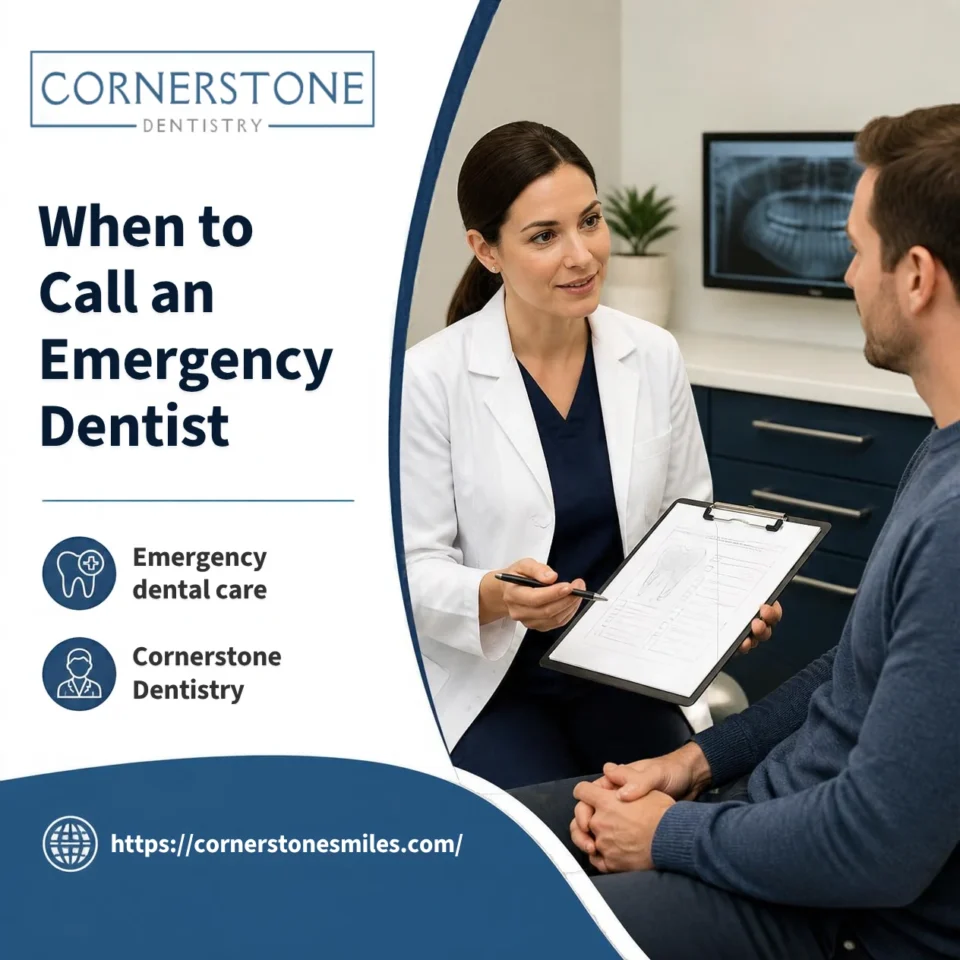
What Happens at an Emergency Dental Appointment
Emergency dental visits are intended to identify the source of the problem, relieve discomfort, and determine what treatment is necessary.
At Cornerstone Dentistry, we approach urgent appointments with a focus on patient comfort and clear communication.
1. Reviewing Your Symptoms
We begin by asking about your pain, injury, swelling, medical history, and any medication you have taken.
Understanding when symptoms started and how they have changed helps us decide what needs to be examined.
2. Examining the Affected Area
Our dentist evaluates the affected tooth and surrounding tissues.
Depending on the situation, we may check for fractures, tenderness, looseness, gum swelling, or other abnormalities.
Digital X-rays may be recommended when imaging is needed to identify damage or evaluate possible infection.
3. Explaining the Findings
Once we understand the problem, we explain the available treatment options.
We also discuss whether immediate treatment is appropriate or whether additional care should be scheduled.
Not every emergency requires an extensive procedure during the first appointment.
4. Providing Necessary Treatment
When clinically appropriate and scheduling permits, we may begin treatment during the same visit.
The immediate goal may be to control pain, protect a damaged tooth, address infection, or stabilize an injury.
Some conditions require follow-up appointments to complete treatment.
5. Planning Your Recovery
Before you leave, we provide aftercare instructions and explain any recommended follow-up treatment.
We want you to understand what was done, what to expect afterward, and which symptoms should prompt another call.
What are the Signs You Need to See a Dentist Immediately?
A tooth problem can go from annoying to serious faster than you think. That is why knowing the signs of…
Learn More
Common Emergency Dental Treatments
The treatment needed during a dental emergency depends on the underlying problem. A severe toothache, fractured tooth, and dental infection may require entirely different approaches.
Common treatment options include:
Dental fillings or bonding: Minor to moderate damage may be repaired with restorative materials when enough healthy tooth structure remains.
Dental crowns: A crown may help restore a tooth that has experienced substantial damage but can still be preserved.
Root canal therapy: When the pulp inside a tooth is infected or irreversibly inflamed, root canal treatment may allow the tooth to be saved.
Dental extractions: Removing a tooth may be necessary when damage or infection makes preservation impractical.
Infection treatment: Treatment may involve drainage or addressing the source of infection through root canal therapy or extraction. Antibiotics are prescribed when clinically indicated, but they do not replace necessary dental treatment.
Tooth stabilization: Certain displaced or loosened permanent teeth may require repositioning and temporary stabilization.
The best treatment cannot be chosen based on pain intensity alone. A clinical examination, and imaging when appropriate, help determine whether a tooth can be restored.
Our priority is to explain your options and recommend care that addresses both the immediate problem and your long-term oral health.
Emergency Dental Help From Cornerstone Smiles
A sudden toothache or dental injury can disrupt your entire day. When symptoms are serious, knowing where to seek help makes a difference.
At Cornerstone Dentistry, we provide emergency dental care for patients in Anderson, SC, and surrounding communities. Our team evaluates urgent concerns such as severe toothaches, broken teeth, lost restorations, swelling, and dental injuries.
We understand that unexpected dental problems can be stressful, particularly when you are unsure whether treatment can wait.
That is why we focus on clear communication, thorough evaluation, and helping patients understand their options before proceeding with treatment.
Schedule Emergency Dental Care in Anderson, SC
If you are experiencing severe tooth pain, swelling, or a dental injury, do not wait for your symptoms to become more serious.
We offer same-day emergency appointments whenever availability allows. Calling early helps us assess your situation and arrange the soonest appropriate visit.
Learn more about our emergency dentistry services in Anderson, SC or contact our office directly.
Call Cornerstone Dentistry at (864) 222-9001 to discuss your symptoms and request an urgent appointment.
If you experience difficulty breathing or swallowing, rapidly spreading facial swelling, or another life-threatening emergency, call 911 instead.
FAQs About Emergency Dental Care
Is a toothache always considered a dental emergency?
No. Mild, temporary sensitivity may not require an emergency appointment. However, severe, persistent, or worsening pain should be evaluated promptly, especially when accompanied by swelling, fever, or difficulty chewing.
Should I go to the emergency room for a dental infection?
An emergency dentist can evaluate many dental infections. However, difficulty breathing or swallowing, rapidly spreading swelling, or signs of serious illness require immediate evaluation at an emergency department.
Can a cracked tooth wait until the next day?
A small, painless chip may be able to wait for a regular appointment. A deeper crack associated with significant pain, looseness, bleeding, or injury should be evaluated urgently.
What should I do if a permanent tooth gets knocked out?
Handle the tooth by its crown, gently rinse it if dirty, and attempt careful reinsertion if possible. Otherwise, keep it moist in milk or an appropriate preservation solution and seek emergency dental care immediately, ideally within 30 minutes.
Can emergency dentists treat tooth pain on the same day?
Many dental practices, including Cornerstone Dentistry, offer same-day emergency appointments when available. Treatment depends on the cause of pain, clinical findings, and appointment availability. Some situations require follow-up care.
Should I call a dentist if my tooth stops hurting?
Yes, if you previously experienced severe or persistent pain. Pain can temporarily improve even when an underlying dental problem remains. An examination can determine whether treatment is necessary.
Need an Emergency Dentist?
Broken tooth, severe pain, or sudden swelling? Get the urgent dental attention you deserve. Call now!