
Table of Contents
If you grew up in South Carolina, sweet tea is probably not just a drink.
It is:
- family dinners
- church gatherings
- summer cookouts
- front porch conversations
- restaurants automatically refilling your glass
- and honestly, part of the culture
In Anderson and across Upstate South Carolina, many people drink sweet tea every single day — sometimes multiple times a day.
So when dentists talk about sweet tea affecting teeth, patients often react like:
“Wait… are you telling me sweet tea is bad now too?”
Not exactly.
Here’s what we usually tell patients at Cornerstone Dentistry:
Sweet tea is not uniquely evil.
The problem is usually the combination of sugar, acidity, and frequency.
Because sweet tea creates two separate dental issues at the same time:
- staining
- cavity risk
And many lifelong tea drinkers slowly develop both without realizing how much their habits contribute.
That does not mean you have to completely give up sweet tea forever.
But understanding why it affects teeth helps people make smarter choices about:
- frequency
- oral hygiene
- whitening
- and long-term enamel health
Let’s break down why sweet tea stains teeth so heavily — especially here in South Carolina — and what you can realistically do about it.
Seeing Stains From Sweet Tea?
Don’t let stubborn discoloration dull your smile. Schedule professional dental care today and keep your teeth looking their best.
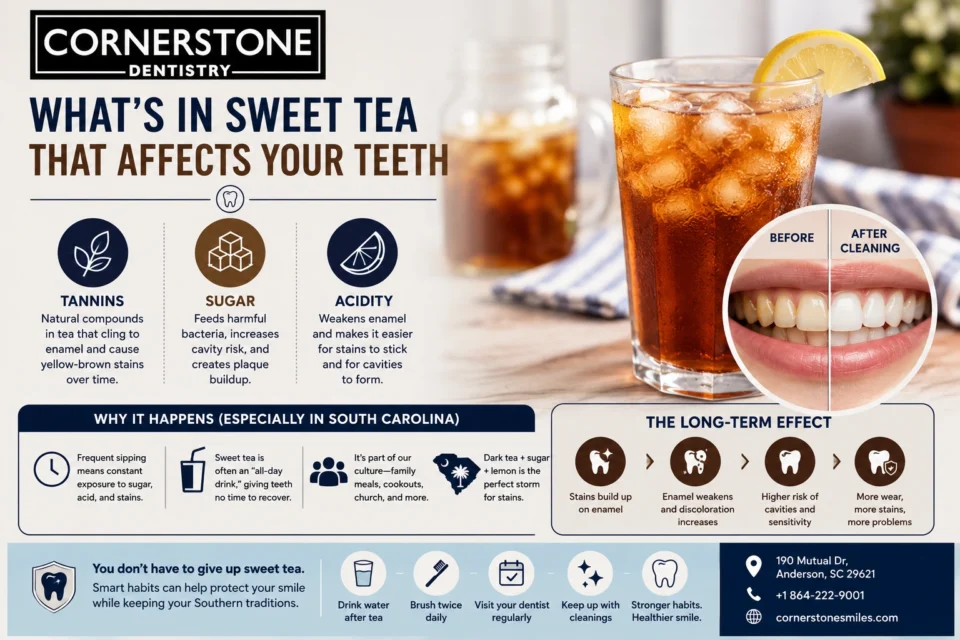
Why Tea Stains Teeth So Easily
Most people assume coffee is the biggest staining culprit.
But tea can actually stain teeth just as aggressively — and sometimes worse.
Especially dark black tea.
The Main Reason: Tannins
Tea contains compounds called tannins.
Tannins:
- stick to enamel
- increase stain buildup
- make pigments cling to teeth more easily
This creates the yellow-brown discoloration many long-term tea drinkers notice gradually over time.
And because sweet tea is often consumed iced and repeatedly throughout the day, exposure becomes prolonged.
Sweet Tea Is Usually an “All-Day Drink”
This matters more than many people realize.
Dentists worry less about a single exposure and more about:
- repeated sipping
- constant acid exposure
- prolonged sugar contact
- enamel never getting recovery time
A person who drinks one glass quickly with a meal may have far less risk than someone slowly sipping sweet tea for:
- hours at work
- long car rides
- outdoor activities
- all afternoon at home
The mouth needs time to recover between exposures.
Constant sipping keeps teeth under repeated attack.
Sugar Makes the Problem Worse
Unsweetened tea can still stain teeth.
But traditional Southern sweet tea adds another layer:
- sugar feeding cavity-causing bacteria
That means sweet tea contributes to:
- external staining
- enamel weakening
- increased plaque buildup
- cavity risk
Especially when consumed frequently.
Some sweet teas contain shocking amounts of sugar.
Restaurant sweet tea can easily contain:
- 25–40+ grams of sugar per serving
And large refill habits add up quickly.
Ice Does Not Protect Teeth
This sounds obvious, but patients sometimes assume iced drinks are less harmful than hot beverages.
Temperature does not eliminate staining potential.
Cold sweet tea still exposes enamel to:
- tannins
- sugar
- acids
- pigments
In fact, because iced tea is refreshing and easy to sip continuously, many people consume far larger quantities than hot tea.
Sweet Tea Staining Happens Gradually
This is important.
Most staining develops slowly over years.
People often do not notice it until:
- comparing old photos
- whitening one area
- seeing cleaner teeth after a dental cleaning
- noticing uneven coloration around fillings or crowns
The staining process is cumulative.
Especially for:
- daily tea drinkers
- smokers
- patients with dry mouth
- older adults
- people with enamel wear
Enamel Texture Matters Too
Teeth are not perfectly smooth.
Microscopic enamel irregularities allow pigments to accumulate gradually.
And once enamel becomes roughened from:
- aggressive brushing
- acid erosion
- grinding
- aging
…stains often cling even more easily.
This is one reason whitening becomes harder over time for some patients.
Sweet Tea Can Also Contribute to Enamel Erosion
This gets overlooked constantly.
Many teas are mildly acidic.
Acid weakens enamel gradually.
Then:
- stains penetrate more easily
- sensitivity increases
- yellow dentin underneath becomes more visible
Ironically:
Worn enamel can make teeth look darker even beyond external staining.
This is especially true in patients who combine:
- sweet tea
- citrus
- soda
- sports drinks
- aggressive brushing
over many years.
Lemon in Tea Makes Things Worse
A lot of Southern sweet tea includes lemon.
Unfortunately, lemon adds additional acidity.
That combination:
- acid + sugar + tannins
…can become especially rough on enamel with constant exposure.
Again, occasional tea is not usually catastrophic.
The issue is repeated daily exposure over years.
Why Some Tea Drinkers Stain More Than Others
Not everyone stains equally.
Several factors change how heavily tea affects teeth.
Higher Stain Risk Often Happens With:
- dry mouth
- smoking
- poor brushing habits
- aging enamel
- gum recession
- existing tartar buildup
- frequent sipping
- inadequate cleanings
Some people naturally accumulate stain much faster than others.
Tartar Makes Tea Stains Worse
This is a major reason some patients feel like whitening toothpaste “stopped working.”
Tea pigments cling heavily to tartar.
And tartar cannot be brushed away at home once hardened.
That is why professional cleanings often create a dramatic difference for tea drinkers.
Sometimes the issue is less intrinsic staining and more accumulated external buildup.
Sweet Tea and Cavities Often Go Together
Many patients think:
“My teeth are stained, but they’re healthy.”
Sometimes yes.
But chronic sweet tea drinking also increases cavity risk because bacteria feed on sugars repeatedly throughout the day.
This becomes especially problematic when:
- sipping constantly
- drinking tea before bed
- skipping water afterward
- combining tea with snacks
- having dry mouth
Dentists in the South see this pattern frequently.
The “Health Halo” Around Tea Can Be Misleading
Tea itself does contain antioxidants and potential health benefits.
But many commercial sweet teas are very different from lightly sweetened tea consumed occasionally.
Large sweet teas from restaurants may contain:
- heavy sugar loads
- syrups
- added flavorings
- acidic additives
At that point, the dental impact becomes much closer to soda than many people realize.
Whitening Toothpaste Usually Has Limits
Many tea drinkers try:
- whitening toothpaste
- charcoal toothpaste
- purple toothpaste
- whitening rinses
Before experimenting with trendy products, it is worth asking is DIY purple toothpaste & charcoal whitening safe and whether those products can actually improve stains without increasing enamel wear.
These may help mildly with surface stains.
But deeper discoloration often requires:
- professional cleanings
- professional whitening
- bonding
- veneers in severe cosmetic cases
And overusing abrasive whitening toothpaste can gradually worsen enamel wear.
That is where patients sometimes accidentally make staining worse long term.
Professional Cleanings Matter More for Tea Drinkers
Frequent tea drinkers often benefit significantly from regular hygiene visits.
Cleanings help remove:
- tartar
- external stains
- plaque buildup
before discoloration becomes deeply embedded.
Many patients are surprised how much brighter their teeth look after a routine cleaning alone.
Especially if stain accumulation is mostly external.
Straws Can Help Somewhat
This is not a perfect solution, but it can reduce direct exposure somewhat.
Especially for:
- iced tea
- highly sweetened beverages
- prolonged sipping habits
But realistically:
Most lifelong sweet tea drinkers in South Carolina are probably not drinking sweet tea through straws at family barbecues.
So moderation and hygiene usually matter more.
Water After Tea Helps More Than People Think
One of the simplest habits that helps is:
- rinsing with water afterward
Water helps:
- dilute sugars
- reduce acid exposure
- wash away pigments
- support saliva function
It is not perfect protection.
But it helps reduce prolonged exposure significantly.
Should You Completely Stop Drinking Sweet Tea?
Honestly, most people are not going to eliminate sweet tea entirely.
And dentists understand that.
The realistic goal is usually:
- reducing frequency
- avoiding all-day sipping
- drinking more water
- improving brushing consistency
- getting regular cleanings
Not perfection.
Because oral health is usually shaped more by long-term habits than occasional indulgences.
Better Habits for Sweet Tea Drinkers
Dentists often recommend:
- drinking tea with meals instead of continuously
- limiting bedtime tea
- rinsing with water afterward
- using fluoride toothpaste
- reducing sugar concentration gradually
- avoiding brushing immediately after acidic drinks
- scheduling regular cleanings
Those changes often help significantly without requiring people to abandon Southern culture completely.
Why Whitening Results Vary So Much for Tea Drinkers
Some patients whiten beautifully.
Others struggle.
That depends on:
- enamel thickness
- stain depth
- existing restorations
- tartar levels
- age
- genetics
- smoking history
- enamel erosion
Sometimes professional whitening works extremely well.
Other times, the discoloration is more complex.
Comparing teeth whitening costs: professional vs. mall kiosks can also help patients understand how treatment quality, supervision, and expected results differ between options.
That is why cosmetic evaluations matter before chasing internet whitening products.
The Bottom Line
Sweet tea stains teeth primarily because of tannins, sugar exposure, acidity, and the tendency many Southerners have to sip it continuously throughout the day.
Over time, that combination can contribute to:
- yellow-brown staining
- enamel wear
- plaque buildup
- and increased cavity risk
At Cornerstone Dentistry in Anderson, Dr. Andrew Wilson and Dr. Dale Hardy usually encourage patients to think realistically about sweet tea habits rather than feeling guilty about them.
Because the goal is not eliminating every Southern tradition.
It is understanding how everyday habits affect long-term oral health — and making small adjustments that help protect your teeth without giving up everything you enjoy.
Don’t Let Sweet Tea Dull Your Smile
Give your teeth the attention they deserve. Call today for trusted dental care and take the next step toward a brighter smile.